
What exactly is a SERP, and what makes it so crucial?
This might appear to be a fundamental question, but it holds immense significance in SEO.
SERPs, or Search Engine Results Pages, are the displays you encounter each time you execute a search online.
For most people, Google is the preferred search engine, handling 90% of all searches, as indicated by Oberlo.
Do you comprehend the implications of your website ascending to the pinnacle of the SERPs? It translates to an influx of organic traffic and a surge in conversions.
In digital marketing, organic traffic is akin to the coveted Holy Grail. What’s the reason? It doesn’t cost a dime, and it’s highly targeted. These searchers are actively seeking the services or products you provide.
However, as of 2023, SERPs are no longer as clear-cut as they once were, and varying SERPs can impact your organic traffic volume in diverse ways.
Does that seem perplexing? It need not be. By the time you finish reading this SERP guide, you will clearly understand the distinct SEO features and SERP features and how to conduct a SERP analysis. Additionally, you will learn strategies to gain a competitive edge in the SERPs.
Are you prepared? Let’s embark on this journey!
Different Types of SERP Results
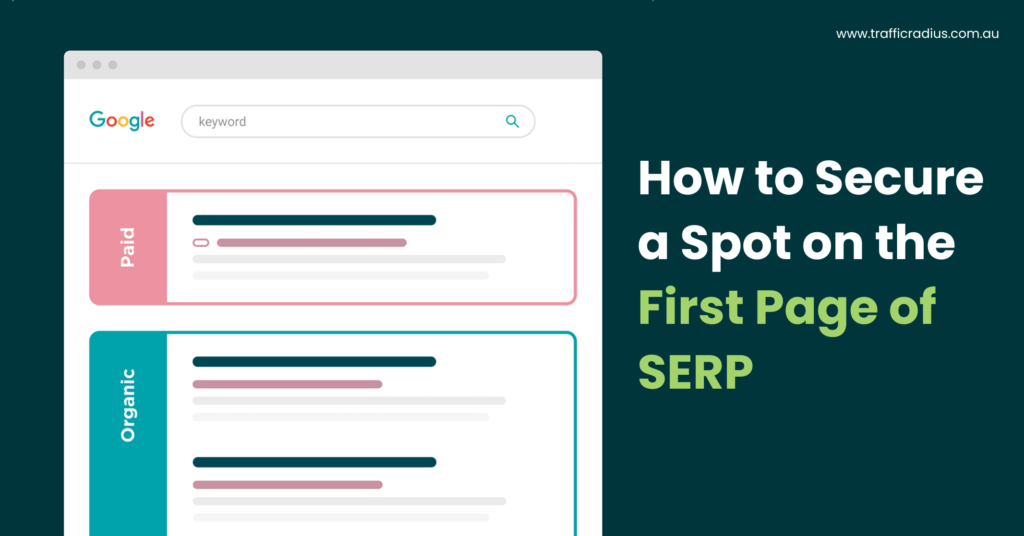
When you examine a Google SERP or any other search engine results page, you observe two categories of results: organic and paid.
The click-through rates (CTR) differ for each Google SERP feature.
For instance, the leading SERP snippet boasts a 42.9 per cent CTR. The highest-ranking organic result garners 39.8 per cent, whereas the ‘People Also Ask’ feature attracts 3.0 per cent.
You can identify paid listings enclosed in a red box, featured snippets outlined in black, visual results marked in green, exploration features highlighted in orange, and organic results indicated in blue. Each of these possesses its own set of advantages and disadvantages, as well as its distinct impact on the SERPs.
Paid vs. Organic SERPs
Paid SERPs
Google Ads facilitates websites to appear at the forefront of the SERP pages for their selected keywords, and in return, they remunerate Google each time someone clicks on their advertisement.
These results are positioned at both the top and bottom of the SERP and bear the label “Sponsored” in bold letters above the URL.
Given their prominent location at the pinnacle of the SERP, these advertisements play a pivotal role in directing targeted traffic to your website. If desired, you can concurrently run paid advertising campaigns and search engine optimisation (SEO) efforts.
Organic SERPs
The search term “SEO” above illustrates how a website can accrue organic traffic from a SERP page.
Most of us are accustomed to the conventional organic listing comprising meta titles and descriptions. However, in recent years, Google has incorporated additional organic SERP features. These features, including the featured snippet, can considerably influence organic traffic.
While paid advertisements provide a swift route to the summit of the results pages (generally, the highest bidders emerge victorious), the battle for organic SERPs results is intense and multifaceted.
Featured Snippets
These are concise information chunks showcased at the SERP’s apex. They enable searchers to swiftly and conveniently obtain the information they seek without navigating through multiple pages.
SERP-featured snippets are available in diverse formats, encompassing text, tables, and videos.
Google leverages automation to determine whether a page constitutes an appropriate featured snippet for specific search outcomes. Generally, a featured snippet is extracted from one of the highest-ranking results.
They notably enhance your visibility, generate additional traffic, and augment brand recognition.
Crafting superior-quality content that addresses prevalent queries pertinent to your niche or sector boosts your likelihood of attaining a featured snippet, amplifying your SEO features and endeavours.
Local Listings
This denotes the trio of local business listings near the SERP’s summit when searching for a local commodity or service. The Local Pack is exhibited adjacent to a map pinpointing the businesses’ locations.
Sample local pack outcomes for the search query “Coffee shop Times Square, New York SERP.”
It may also be called the Snack Pack, Map Pack, or Google 3-Pack.
Analogous to featured snippets, the Local Pack assists websites in achieving heightened visibility and traffic.
For brick-and-mortar local enterprises, the Local Pack is indispensable for distinguishing themselves in the SERPs and enticing more prospective leads from interested consumers.
Statista reveals that 21 per cent of consumers conduct daily online searches for local businesses, while 35 per cent claim to search for local enterprises online multiple times weekly.
Shopping Listings
If you have ever input a shopping-related query online, such as “best iPhone deals,” you are already acquainted with this SERP category.
Nonetheless, for store proprietors, these listings do not materialise spontaneously. If a business aspires to be featured in the Shopping Results, it must compile a product feed encompassing all crucial product data, including its name, description, imagery, and pricing.
The ranking of these listings is contingent upon their relevance to the search terms.
Shopping results are an exceptional means to exhibit your products and captivate enthusiastic customers.
People Also Ask
This SERP feature materialises during online searches and is instrumental in acquiring organic traffic. Google presents a series of three to four, occasionally more, supplementary correlated questions and responses.
Each question furnishes a concise response, which can be clicked on to reveal more details. The outcomes fluctuate based on Google’s algorithm, and the search engine routinely refreshes them with new questions and responses.
Formulating content centred around the queries in ‘People Also Ask’ is a stellar strategy to achieve a higher SERP ranking.
Generative AI in SERPs
As AI continues to dominate various aspects of our lives, it is only a matter of time before search engines like Google and Bing incorporate it into their systems.
Generative AI employs machine learning algorithms to craft and display original and pertinent content to users based on their search inquiries.
What implications does this have for users?
It signifies that search outcomes are more dialogic and tailored to an individual’s search. Moreover, results are contextually enriched, thereby enhancing the overall search experience.
To explore this feature, you can register for Google’s Search Labs, which is currently in the testing phase.
The Role of SEO
The relationship between SERPs and SEO is fundamental.
SEO is crucial in determining a website or webpage’s ranking on the SERP. It ensures that a website appears as high as possible on the SERP, increasing the likelihood of receiving clicks and driving traffic.
Your actions in this area are crucial for building organic traffic and achieving your traffic objectives.
Many people find SEO daunting, but it is a process; even basic SEO steps can propel you to the top of the results.
By consistently applying the correct SEO features and strategies, you can secure top positions in the SERPs and amass a considerable volume of organic traffic.
How to Perform a SERP Analysis for Your Business
A SERP analysis involves evaluating your website’s performance on the search engine result pages to refine your SEO strategy and attract more traffic.
Does that sound appealing? Great! Here’s how to do it:
Evaluate keyword difficulty and traffic potential using SEO SERP tools like Ahrefs.
Identify your keywords. Search for keywords pertinent to your niche. Conduct a competitive analysis to discern which keywords your competitors prioritise and where they may be lacking. Ubersuggest is handy for this step. Input your keyword and click “search” to receive a list of keyword suggestions and content ideas. AnswerThePublic is another helpful tool.
Comprehend search intent. Understanding what users seek and ensuring your content addresses their questions is imperative.
Determine your current position in the SERPs. Knowing your starting point is essential for improvement. Google Ads is helpful for this step. Pay close attention to trends like rankings, click-through rates, engagement, conversions, etc., and pinpoint any areas that require enhancement.
Evaluate your content. Besides quality, optimise your article for your target keywords. Incorporate them into your title tags, meta descriptions, headers, and content.
Optimise your site. Did your keyword research or competitive analysis uncover additional optimisation opportunities? If so, craft a new article, optimise existing content, or bolster your SEO strategy.
Minor Adjustments in SERP Results Can Drastically Affect Your Traffic
The main goal of Google and other search engines is to deliver the most accurate SERP results to the user. To achieve this, Google utilises algorithms considering hundreds of diverse factors to ascertain the most suitable search results for everyone.
This extensive personalisation implies that a SERP can differ significantly. Below are some vital components of the SERPs that can profoundly influence your organic traffic.
How to Secure a Spot on the First Page of SERP
Do you often find yourself scrolling to the second page of a SERP? Or do you quickly scan the top results and select the most relevant one?
Occasionally, we might venture to the second page to explore other options, but typically, most of us select from the top results. This behaviour explains the significant traffic decline between the first and second pages of the SERPs.
A staggering 95.1 per cent of all Google users don’t venture past the first page, leaving the remaining pages to compete for a mere 4.9 per cent of the traffic. This stark contrast underscores the critical importance of securing a ranking on the first page — as most users never venture to the second page.
All SERP Positions are Not Equally Beneficial
You might think, “Great, once I secure a spot on the first page, I’m all set.”
Regrettably, it’s not that simple.
While making it to the first page of the SERP is a commendable achievement, it’s merely the initial hurdle. There is a significant discrepancy in the click-through rate (CTR = number of clicks divided by the number of times your listing is shown) between the top three results and those ranked lower. These positions directly impact your organic traffic.
Achieving a first-page ranking is commendable, but there is a compelling reason to strive for the top spots.
Earlier, we noted that 95.1 per cent of all searchers only venture up to the first page of results. However, this does not imply that 95.1 per cent of all searches result in clicks on organic listings.
Only 45.1% of searches culminate in an organic click.
Paid Traffic
Paid advertisements occupy a prominent position in the SERPs, naturally attracting many clicks. According to a survey by LocalIQ/Wordstream, the click-through rates for paid traffic search benchmarks stand at 6.30 per cent.
Typically, there are three categories of searches: informational, navigational, and transactional. Since advertisers pay for each click and seek a high return on investment, they usually target transactional search terms with the highest buyer intent.
While organic clicks for transactional search terms are still attainable, using tools like Ubersuggest to determine which search terms are likely to have a high proportion of paid clicks is advisable.
By examining your keywords’ cost per click (CPC), you can identify which will likely be dominated by ads. For instance, in the results below, “CRM tools” have a high CPC, indicating high competition and a greater likelihood of competing with ads.
Zero-Click Searches
Search engines like Google continuously strive to enhance the user search experience. One way they have achieved this is by introducing SERP features such as Featured Snippets and Knowledge Panels, which provide users with quick access to essential information.
The featured snippet, for example, offers users a brief answer without requiring them to click a link. As a result, even though Microsoft secured the snippet and Salesforce obtained the first traditional organic listing, neither received the click. It’s a no-click search and zero-click searches because the user can read the snippet.
How to Leverage SERP for Increased Organic Traffic?
The presence of paid SERPs ads and the rise of no-click searches have strengthened the abundance of organic traffic. However, it’s essential to leverage the SERPs to your advantage strategically.
Each SERP has a frontrunner; maintaining that top position requires consistent effort. To challenge and eventually surpass them, you need a well-crafted approach.
By thoughtfully utilising this control, you can significantly enhance your click-through rate (CTR) and positively impact your organic traffic. Here’s a SERPs guide on how to do it.
Creating Relevant, High-Quality Content
For Google to rank your page higher, it must be highly relevant to the search query and contain top-notch content. Failing to meet these criteria gives Google no reason to place you on the first page, as it doesn’t assist searchers in fulfilling their objectives.
Your keyword research is pivotal here, as it helps you decipher exactly what your audience is seeking. By delivering content that directly aligns with their needs, you draw more visitors to your site.
Enhance Your Listing to Make it More Attractive
You hold the reins when it comes to shaping your SERP listing. You can modify your title, meta description, and structured data, so seize this chance to differentiate yourself
Even if you’re ranked third for a particular keyword, you can outshine the top listing by crafting a more captivating and pertinent title and description. Although Google typically utilises a page’s chosen title and description, it occasionally alters them.
Aim for SERP Features

As Google continues incorporating “additional” SERP features, it’s advisable to adapt and ensure your website secures a spot.
While these features may contribute to a rise in no-click searches, they can also lead to increased CTRs when you manage to secure them. HubSpot discovered that websites featured in snippets experience a substantially higher CTR.
Featured Snippets, Knowledge Panels, Local Packs, and Shopping Results are all attention-grabbing and enticing to users. By capturing these SERP features, you open the door to a surge in organic traffic.
SERP FAQs
What does the term “SERP” mean in the context of SEO?
In the realm of SEO, “SERP” stands for Search Engine Result Page. Employing SEO strategies becomes crucial to have your website or content appear on the first page of search engine results. By optimising content with relevant keywords, incorporating SEO techniques, crafting high-quality material, and addressing user needs, you can attract a higher volume of organic traffic to your web pages. It’s important to note that achieving prominent results in SERPs necessitates patience and sustained effort due to the time-consuming nature of content optimisation.
Define SERP tracking.
SERP tracking, called SERP monitoring, involves analysing a website’s position in search engine results over time. This practice enables the recognition of patterns, enhancement of online visibility, and gradual improvement of search rankings.
Elaborate on the concept of a brand SERP.
A brand SERP denotes the outcome page that emerges when searching for a specific brand name, such as Apple or Nike. For instance, searching Apple would yield a brand SERP featuring links to the official website, associated social media profiles, and relevant content like news articles or reviews. The significance of a brand SERP lies in its influence on shaping the public’s perception of a brand in the digital sphere.
How can SERPs be utilised effectively?
Search Engine Result Pages (SERPs) encompass the outcomes displayed when searching on a search engine. To target a particular keyword, perform a basic search query. For instance, you could enter “digital marketing” or “how to conduct an SEO analysis.” By scrutinising the top-performing content, you can glean insights into successful approaches. This involves identifying websites that rank well for your desired keywords and examining the nature of their content, whether in blogs, comprehensive articles, case studies, visuals, or more. Such an analysis assists in recognising content gaps that offer opportunities to create superior content. For instance, you could generate content that aligns better with search intent or optimise existing articles. Additionally, conducting a SERP analysis may unveil untapped keywords and phrases for exploration.
Explain the concept of SERP features.
Frequent users of online search engines may have observed that specific search results are accompanied by supplementary information, like lists or maps. These are referred to as SERP features. Notable varieties of SERP features encompass the Local Pack, People Also Ask sections and featured snippets. These features serve as effective means to augment the visibility of websites on search engines, ultimately leading to increased click-through rates.
Final Thoughts
A SERP, or search engine results page, is displayed after a user enters a query into a search engine like Google. It’s a key to unlocking your website’s full potential.
With the constant evolution of SERPs, including video content, generative AI, zero-click searches and content, and a focus on search intent, navigating the landscape may seem daunting. However, with a solid foundation in SEO and a commitment to producing high-quality, relevant content, you can stay ahead of the curve.
Mastering the basics allows you to develop a SERP strategy to enhance visibility and optimise conversions. Armed with a strong understanding of SERPs, you can now focus on fine-tuning your SEO to help your website reach its objectives.