
The dynamic world of digital marketing often poses challenges, but the solution often lies in testing and refining strategies. A pivotal aspect, especially for businesses aiming to thrive online, is SEO testing. In a universe where Google algorithms change frequently, companies must adapt. SEO tests ensure your content resonates with search engine criteria, giving you an upper hand in the crowded digital space.
The primary objective is to understand what modifications can improve the site’s visibility, drive organic traffic, and enhance user engagement. By continually testing and iterating, businesses can better tailor their SEO strategies, ensuring they’re aligned with ever-evolving search engine algorithms and user behaviours.
Would you like to engage a seasoned group of SEO professionals to conduct a comprehensive SEO examination now?
Get in touch with Traffic Radius to connect with an expert and enhance your SEO results. Continue your search to gain further insights into the process of conducting SEO evaluations on your website.
Unveiling the Magic: What Exactly is SEO Testing?
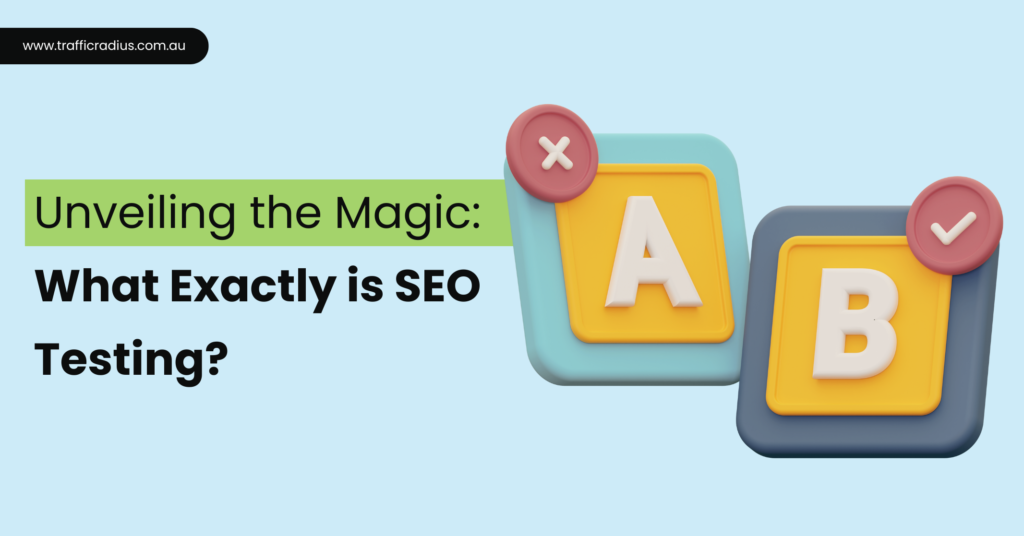
SEO testing is making changes to web elements, observing the impact on search performance and refining advertising strategies based on results. Its benefits are manifold:
- Enhancing rankings on SERPs.
- Improving website conversion rates.
- Offering insights into visitors’ behaviour.
- Fine-tuning content marketing campaign efforts for better ROI.
Executing the Perfect SEO Test: A Step-by-Step Guide

Define Your Objective: Understand what you want to achieve. This could range from boosting traffic to improving page rankings.
- Pick a Testing Tool: Leveraging tools like GA4 ensures accurate results.
- Establish a Control Group: Maintain a section of your site unaltered to compare results.
- Run the Test: Implement the changes and observe results over a period.
- Analyse and Implement: Post-testing, gather insights and optimise based on findings.
7 Game-Changing SEO Experiments to Elevate Your Strategy
SEO is not just about driving traffic; it’s about ensuring traffic is relevant, engaged, and primed for conversion. Here are some transformative experiments you can conduct to ensure that your SEO game is top-notch.
1. Title Tag Tango:
The importance of title tags cannot be overstated. They’re one of the first things both Google and potential visitors see.
- Purpose: To determine which keywords or phrases resonate most with your audience.
- Method: A/B test variations of your title tags.
- Outcome: By understanding what your audience prefers to read, you can tailor your content titles to improve SERP’s performance and drive more visitors.
What To Know?
- This could pertain to a unique offer, such as complimentary shipping when dealing with product pages.
- In the context of blog posts and guides, this might involve an attention-grabbing statement like “definitive guide” or “top-rated [insert product] as recommended by professionals.”
- The insights gathered from evaluating title tags can provide a clearer understanding of search intent, shedding light on why individuals use specific terms when conducting online searches.
- Armed with this knowledge, you can tailor your future content to feature titles and content that align more closely with the interests of your target audience.
2. Header Harmony:
- Headers aren’t just for aesthetics or organisation; they’re crucial for SEO.
- Purpose: To emphasise the hierarchy of your content.
- Method: Experiment with different headers.
- Outcome: Since various headers (H1, H2, H3, etc.) tell search engines about the importance of content sections, tweaking them can influence your content’s search visibility.
What To Know?
Power up your headers with these magnetic words to ensure they’re impossible to ignore:
- Time-sensitive triggers: Immediate, exclusive, rush.
- Dazzling adjectives: Stunning, pioneering, top-notch.
- Freshness indicators: Brand-new, recent, innovation.
- Cost-conscious terms: Complimentary, offer, bargain, unbeatable price.
3. Link Landscape:
Links are the roads between pages on the internet.
- Purpose: Optimise the paths users and search engines take through your content.
- Method: Adjust and test your internal (links going to other parts of your website) and external (links going to other websites) linking strategies.
- Outcome: A well-structured link strategy can enhance user experience and boost page authority.
What To Know?
When discussing a main product within your content, where’s the ideal place to insert that reference and link? Early in the introduction or a bit further down? SEO testing can illuminate the optimal placement, enhancing user experience and engagement.
That said, major layout overhauls might not always be the answer. During your layout evaluations, consider A/B testing specific elements like buttons and forms. Leveraging an SEO-centric approach to design can guide readers through your content, maximising the chances of them taking desired actions.
4. Layout Leap:
The layout can impact user experience and how search engines interpret your page.
- Purpose: To find a design that’s both user-friendly and SEO-optimised.
- Method: Test different page designs.
- Outcome: By contrasting layouts, you’ll understand user preferences and the resulting SEO impact, leading to more engaged visitors.
What To Know?
Your images can play a pivotal role in audience engagement. Assessing attributes like dimensions, clarity, positioning, and the primary subject matter can provide insights. Photos with human subjects often yield better outcomes, such as enhanced conversion rates. Sometimes, viewing things from a fresh perspective, symbolised by a simple image, can make all the difference.
5. Imagery Insights:
Images aren’t just for show; they can significantly affect your SEO.
- Purpose: To understand how different images or their arrangements impact user engagement.
- Method: Rotate and replace images, then monitor user behaviour and search performance changes.
- Outcome: Optimal imagery can enhance user experience and reduce bounce rates.
What To Know?
Your images can play a pivotal role in audience engagement. Assessing attributes like dimensions, clarity, positioning, and the primary subject matter can provide insights. Photos with human subjects often yield better outcomes, such as enhanced conversion rates. Sometimes, viewing things from a fresh perspective, symbolised by a simple image, can make all the difference.
6. Copy Craft:
Every word counts when it comes to SEO.
- Purpose: To determine the ideal content length.
- Method: Experiment with varying lengths of content.
- Outcome: Finding the right balance ensures your content is engaging for readers and optimally structured for search engine criteria.
What To Know?
How lengthy are your typical articles or service descriptions? Producing voluminous content isn’t the only goal – delving deep into subjects while catering to reader preferences is crucial. A comprehensive range might boost your search rankings, but excessively long pieces might not always keep readers hooked.
7. CTA Calibration:
Your call to action is often the bridge between a visitor and a conversion.
- Purpose: To maximise conversions.
- Method: Test different CTAs regarding wording, positioning, and design.
- Outcome: The proper CTA can significantly enhance page performance and revenue generation.
What To Know?
Consider this: If someone urgently needs guidance on changing a tyre, would they linger on a prolonged guide or revert to search results seeking a succinct solution? The ideal content length can be determined through SEO testing across blogs, instructional content, and product descriptions. Prominent CTAs have the power to turn visitors into customers rapidly. Thus, testing variations can help ascertain the most effective approach. It’s also worth assessing the urgency in your CTA phrasing. How poised is your audience to invest in what you’re offering?
The Rationale Behind Expert SEO Testing
SEO is a blend of art and science. While tools and tactics are crucial, the strategy is paramount. At Traffic Radius, with our wealth of experience, you can get:
- Tailored Strategies: Custom strategies crafted for your unique business needs.
- Advanced Tools: Dive deeper with cutting-edge SEO tools and techniques that the average business might not have access to.
- Expertise: Trust in the deep-seated knowledge of evolving SEO strategies and the world of marketing automation.
- Time-Efficiency: Achieve your desired outcomes without the steep learning curve.
Amplify Your Strategy with Our No-Cost Web Audit
In the dynamic world of digital marketing, staying static isn’t an option. A website audit isn’t just a health check; it’s a roadmap to excellence.
Here’s why you should consider it:
- Performance Insights: Get a clear snapshot of your website’s current standing.
- Spotlight on Improvement Areas: Identify untapped potential in terms of SEO and content.
- Strategic Planning: Use insights to craft a more potent SEO strategy.
With the ever-evolving nature of social media and search engines, keeping your SEO tactics updated is pivotal. Why settle for good when greatness is within reach? Harness the power of expert marketing services with Traffic Radius and watch your business transcend boundaries.
FAQS
1. What exactly is SEO testing?
At its core, SEO testing is the practice of making calculated changes to a website’s elements and then measuring how these changes impact the site’s performance in search engine results pages (SERPs). This can encompass anything from altering on-page elements like title tags and meta descriptions to off-page elements like backlinks.
2. How does SEO testing differ from regular SEO practices?
While regular SEO practices involve implementing tried-and-true methods for optimising a website’s visibility in search results, SEO testing is about experimentation. Think of traditional SEO as the foundational work: keyword research, link building, content creation and technical optimisation. In contrast, SEO testing is more about refining these efforts. It involves implementing a change and comparing performance metrics against a control (the original version). Through SEO testing, businesses can better understand which optimisation techniques are most effective for their specific website and audience.
3. What tools are essential for effective SEO testing?
Answer: Several tools can facilitate effective SEO testing. Some of the most widely utilised include:
- Google Search Console: Provides insights into how Googlebot views your site and can highlight any crawl errors or indexing issues.
- Google Analytics (or GA4): A crucial tool for monitoring traffic, user behaviour, and conversions. It allows you to measure the success of your SEO tests by offering a granular look at how users interact with your website.
- Split Testing Tools: Platforms such as Optimisely or VWO can run A/B tests on different page elements to measure their impact on user behaviour and conversions.
- SEO Crawlers: Tools like Screaming Frog or SEMrush offer a deep dive into your website’s structure, revealing potential issues like broken links, duplicate content, or missing metadata.
4. How long should an SEO test run?
The duration of an SEO test can vary depending on several factors, including the type of change being tested, the volume of website traffic, and the desired statistical significance of results. It’s crucial to let a test run long enough to gather meaningful data. A minimum of two weeks is often recommended for most tests, but tests involving significant changes may require a month or longer to yield definitive insights. It’s also crucial to consider external factors such as seasonality or industry events, which can influence search behaviours and potentially skew test results.
5. How often should I conduct SEO tests on my website?
Regular testing is a cornerstone of a dynamic and effective SEO strategy. However, the frequency of tests should be balanced with the need to allow sufficient time for gathering data and analysing results from each trial. Rather than sticking to a rigid schedule, focus on testing when:
- You introduce new content or features on your website.
- You notice a sudden change in traffic or rankings.
- Search engines update their algorithms.
- You want to refine existing website elements for optimal performance.
Remember, the objective of SEO testing is continuous improvement. While frequent testing can provide invaluable insights, ensuring each test is well-planned, properly executed, and thoroughly analysed before moving on to the next experiment is essential.
Conclusion
Maintaining a competitive edge necessitates constant refinement and adaptability. Among the most potent strategies available is SEO testing, also known as SEO experimentation. This blog summary offers a comprehensive look into the significance of SEO testing and its profound impact on your online presence.
Comprehending SEO Testing
SEO testing involves a systematic approach to experimenting with diverse SEO techniques, strategies and optimisations to enhance a website’s search engine rankings, visibility and overall performance. It entails deliberately altering your website or content while observing its effects on your search engine outcomes.
Crucial Advantages of SEO Testing:
- Data-Backed Decision-Making: SEO testing rests on a data and analytics foundation, enabling you to make well-iformed choices grounded in concrete evidence rather than relying on guesswork.
- Sustained Enhancement: By continuously testing and refining your SEO strategies, you can fine-tune your website’s performance over time, paving the way for enduring growth.
- Adaptability: The digital landscape is ever shifting, and tactics effective today may prove futile tomorrow. SEO testing empowers you to remain nimble and adjust to the evolving algorithms of search engines.