
What is Organisation Schema?
Picture this: your website becomes a symphony of data, playing a harmonious tune for both humans and tech. 🎶
Schema markup, that enchanting vocabulary, dances within your HTML, whispering secrets to search engines. 🔍
It’s like having your own secret language, making sure search engine wizards understand your business or organisation. 🧙♀️📚
Oh, and don’t forget about the marvellous schema markup testing tool, your trusty sidekick on this adventure! 🛠️🔬
Experience the wizardry of schema organisation as your website gleams in the eyes of search engine royalty. 👑🌟
Let your online presence shine like a radiant star with the mystical art of schema markup! 🌠🚀
Exploring the Significance of Organisation Schema in SEO
Organisation schema is like the digital DNA of your company, giving search engines a glimpse into what you do, how you do it, and where you fit into the virtual landscape. It’s not just a tool for machines; it’s a beacon for searchers, guiding them to your door with the wave of a digital wand. 🧙♂️✨
Though it doesn’t directly boost your ranking, imagine organisation schema as the glittering threads that catch the search engine’s eye, leading it to showcase your webpage for the right audience. It’s like your webpage’s tailored suit for a grand party—neat, elegant, and impossible to overlook. 🎩👔
But it’s more than a mere aesthetic; it builds a bridge of trust. By defining your company’s essence, you’re whispering to both the machines and the minds behind the screens: “This is us; we’re real, credible, and ready to engage.” It’s a digital handshake that echoes far and wide. 🤝💼
Think of Google’s knowledge panel as a vibrant portrait of your business. Picture “Petco,” for example. It’s no longer a mere name but a vivid gallery filled with images, links, and info. It’s like a storefront window adorned with all your finest wares, inviting users to stop, look, and connect. 🐶🐱🏪
Moreover, an effective organisation schema makes your business sprawl luxuriously across the search engine results pages (SERPs). It’s not just claiming a spot; it’s owning the stage. The result? Your competitors are pushed to the wings, while you bask in the spotlight, winning clicks, hearts, and minds. 🏆🌐💙
Step-by-Step Guide to Applying Organisation Schema
Implementing organisation schema is like setting up the stage for your virtual debut! 🎭✨ You’ll need to pen down the organisation schema markup and place it within the folds of your website, crafting a digital introduction that tells the world who you are.
Here’s the essential ensemble you’ll need to gather:
1. Type of Organisation: What’s your role in the business world? Are you a theatre, a bakery, or a tech giant? Define your essence! 🏢
2. Organisation Name: Your business name, the call that echoes across the digital sphere! 📛
3. Official Website: The door to your digital realm; make sure it’s inviting! 🌐
4. Address: Your virtual ‘Open for Business sign. This is where you’re located! 🏠
5. Official Logo: The emblem of your brand, the symbol that speaks volumes. 🎨
6. Description: A few lines that paint a picture of what you do, and why you do it. 🖋️
7. Social Accounts: Connect your social media; it’s like laying down paths to different rooms of your universe! 📱💻
8. Unique Identifying URL: Your exclusive digital fingerprint that distinguishes you from the crowd. 🔗
Utilising JSON-LD for Organisation Schema Integration
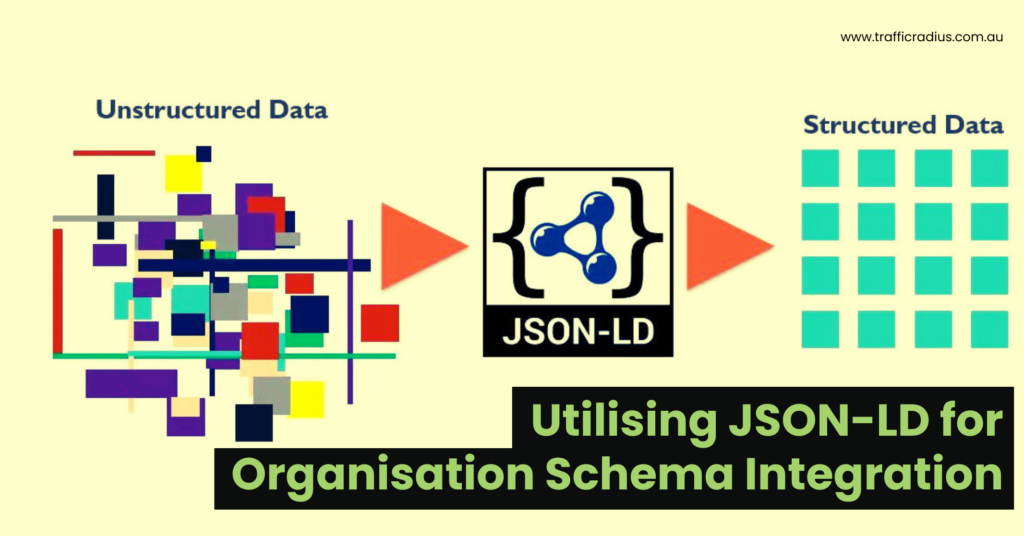
SON-LD is your digital passport to the realm of structured data. 🌐✨ It’s a streamlined format embraced by the search giant, Google, to paint a clear picture of your online presence.
Google gives a big thumbs up to JSON-LD for adding Schema Markup. So, it’s the golden ticket you’d want in your toolkit. 🎫🔧
Ready to dive in? You’ve got two routes to embark on this journey:
Plugin Power: For those who prefer a bit of automation, there are plugins like SchemaPro, Rank Math, and Yoast. Plug, play, and let the magic unfold. 🧩🔌
Manual Mastery: Fancy a hands-on approach? Dive deep with an HTML editor, be it Notepad or Notepad++.
Here’s your step-by-step guide:
Grab the JSON-LD code you’ve got.
Replace generic placeholders with details that scream you. 🎤
Under “@type”, you’re not just stuck with “Organisation”. Dive deeper with subcategories like LocalBusiness, SportsOrganization, or even ResearchOrganization. Check out the grand list on Schema.org for more.
Got social profiles or other professional links? Fill them into “@sameAs”. Imagine this as your digital business card. 📇
Use “@id” for a unique identifier. Resist the allure of using your homepage here. Instead, go for something distinctive like https://www.example.com/#organization.
Finally, to ensure your masterpiece is in tip-top shape, run it through a schema markup testing tool. 🧐🔍 This way, you’re not just sure; you’re Google-sure.
Incorporating Microdata for Organisation Schema
Ready to dive into the world of structured data with microdata? 🌐💡 It’s an HTML-centric way to bring definition to your website’s content, a pivotal component in the vast arena of schema markup types.
Microdata, in essence, adds sprinkles of context to your website’s HTML. This helps search engines grasp the essence of your content, bolstering your schema markup in SEO.
👩💻 Let’s Break it Down:
1. Access the back-end of your website where the magic of code happens.
2. Spot where crucial company info resides, perhaps on the homepage, contact page, or the trusty footer.
3. Commence the schema markup journey with the opening tag:
“`html
<div itemscope itemtype=”https://schema.org/Organization”>
“`
4. Now, it’s attribute time! 🎨 Imagine you’re tagging the essence of the content. A company name, for instance, is enveloped by an attribute, directing search engines, “Hey, this is the company name!”.
“`html
<h1 itemprop=”name”>Your Company Name</h1>
“`
5. Need to tag a description? Just slip in the “description” attribute. Simple, right?
“`html
<p itemprop=”description”>A vivid description of your company.</p>
“`
6. Addresses are a tad special! 💌 They get their own unique treatment, as they’re a sub-category of their own:
“`html
<div itemprop=”address” itemscope itemtype=”http://schema.org/PostalAddress”>
<span itemprop=”streetAddress”>123 Main Street</span>
<span itemprop=”addressLocality”>City</span>,
<span itemprop=”addressRegion”>State</span>
<span itemprop=”postalCode”>12345</span>
<span itemprop=”addressCountry”>Country</span>
</div>
“`
7. Wrap things up neatly with the closing `</div>` tag. 🎁
When you’ve added all the bells and whistles, your organisation schema, sparkling with structured data, should resemble:
“`html
<div itemscope itemtype=”http://schema.org/Organisation”>
<h1 itemprop=”name”>Your Company Name</h1>
<p itemprop=”description”>Your company’s description.</p>
…[address and other details]…
<span itemprop=”url”>https://www.yourwebsite.com/</span>
…[social links]…
</div>
“`
Harnessing microdata means making your site SEO-ready and offering search engines a clear map of your content. 🚀💼 Remember, the clearer you communicate with search engines, the better they can serve your site to the right audience. 🌍🎉
Implementing RDFa for Organisation Schema Markup

Have you heard of RDFa (Resource Description Framework in Attributes)? 🌟 It’s the third way to jazz up your website with structured data. Like microdata, it also harnesses the power of HTML with a more complex twist, making it one of the distinct schema markup types.
Why RDFa, you ask? If you’re running on a platform like Drupal that already employs RDFa, you’re in the right lane! 🏎️💨
Here’s how to spice up your website with RDFa:
1. Find Your Spot: Navigate to the back-end of your website and pinpoint where your company’s vital info lives – perhaps on the homepage, contact page, or footer.
2. Set the Stage: Begin with the following tag:
“`html
<div vocab=”http://schema.org/” typeof=”Organization”>
“`
3. Add Attributes: Time to add attributes that tell search engines what’s what! 🏷️ E.g., for your company name:
“`html
<span property=”name”>Your Company Name</span>
“`
4. Don’t Forget the Description: Want to describe your organisation? Add:
“`html
<span property=”description”>Description of the company.</span>
“`
5. Addresses Are Special: Just like in microdata, addresses need extra attention:
“`html
<div property=”address” typeof=”PostalAddress”>
<span property=”streetAddress”>Your Street</span>
…[other address details]…
</div>
“`
6. Seal the Deal: Make sure everything is neatly enclosed:
“`html
</div>
“`
Voila! Your organisation schema in RDFa is set and ready to boost your schema markup in SEO 🚀.
In a Nutshell:
RDFa might feel a tad more complex than microdata, but it’s a solid choice for those working on platforms like Drupal. Adding RDFa to your website builds a clear pathway for search engines, potentially driving more visitors right to your doorstep. 🏠✨ If you’re already treading the RDFa path, why not take full advantage? Happy coding! 🎉💻
Verifying Your Organisation Schema: Testing Methods
Want to ensure your newly implemented organisation schema is shining bright like a diamond? 💎 You can, and should, run tests to peek into what schema is already adorning your site, and inspect the brand-new organisation schema you’ve just added.
Here’s the grand unveiling on how to do it:
Conducting a Comprehensive Site Audit for Schema Accuracy
In the vast universe of SEO, one star shines exceptionally bright: schema markup. 🔍✨ This detailed, structured data helps search engines understand your site’s content better, potentially offering a significant boost in visibility.
However, just like every star needs periodic checks to ensure it’s shining its brightest, your website requires routine site audits to guarantee that its schema markups are accurate, effective, and up to date.
Why Audit?
Accuracy: To ensure that the schema markup aligns perfectly with the content it’s meant to describe. A mismatch can be misleading for search engines. 🔄
Efficiency: An optimised schema can result in rich snippets, enhancing click-through rates and driving more organic traffic. 🚀
Evolution: The world of schema markup in SEO is ever-evolving. An audit can help you stay on top of updates, ensuring your website remains at the forefront. 🌱
The Process:
Discovery: Use schema markup testing tools to identify existing schema types on your site. 🧐
Evaluation: Assess if the markup is correctly implemented, providing the desired information to search engines. 📋
Optimisation: Refine any inconsistencies or errors found during the evaluation. 🛠️
Testing & Validation: Post-optimisation, rerun tests to ensure your schema is now spot-on. ✔️
Remember, a comprehensive site audit isn’t just about identifying issues; it’s about unlocking opportunities. By ensuring your schema is precise and accurate, you’re setting the stage for better search visibility, more user engagement, and a brighter star in the SEO galaxy! 🌌🌟
Utilising Schema.org Tools for Validation
Testing your organisation’s schema is essential in ensuring it’s properly implemented. The Schema.org validator provides a handy tool for this process. 🧪🔍
To evaluate a webpage with organisation schema already in place:
1. Go to the Schema.org validator site.
2. Enter the URL of your page in the “FETCH URL” field.
3. Click the big, bright “RUN TEST” button.
4. Voila! Watch as the validator does its magic. Errors or warnings will appear, allowing you to identify and fix any issues.
But what if you’ve penned a brilliant code snippet that hasn’t yet debuted on your site? Worry not! Here’s how to test it:
1. Head over to [Schema.org validator] (https://validator.schema.org/).
2. Click on the “Code snippet” tab (it’s waiting for you!).
3. Paste your masterpiece into the box.
4. Click “RUN TEST” and pat yourself on the back.
Any mistakes or alerts will be spotlighted, making it simple for you to correct and optimise.
Remember, your schema markup plays a star role in SEO. So make sure to fine-tune it to perfection with Schema.org’s validator. It’s like giving your site’s backstage details a standing ovation! 🎭
Illustrative Example of Organisation Schema Implementation
SCHEMA IMPLEMENTATION EXAMPLE IMAGE
Key Recommendations for Optimising Your Usage of Organisation Schema
Implementing schema markup in your digital presence? Here are some gold nuggets of wisdom for you to follow, all aligned with the pursuit of a perfect schema organisation! 🌟
Choose JSON-LD Format When You Can: It’s Google’s favourite! This format is flexible and easy to integrate, making it the top pick among the various types of schema markup. 🏆
Accuracy is Key: Keep your information up-to-date and consistent across the web, from your website to your social media channels, and of course, your Google Business Profile. It’s like keeping your digital wardrobe neat and stylish! 🎩
Embrace the Extras: If you’re using the “LocalBusiness” subcategory, add those extra touches like opening hours, prices, and geo-coordinates. It’s like a sprinkle of extra spice in your favourite dish. 🍲
Maximise Your “@sameAs” Links: These aren’t just hyperlinks but bridges to credibility. The more you have, the richer the context for your content. It’s a digital trust handshake. 🤝
Play by Google’s Rules: Adhere to Google’s spam guidelines. Using a schema markup testing tool, ensure that the information you present through schema markup Google recognises is both truthful and accurate. Misleading users is a no-go. 🚫
Remember, schema markup isn’t just about ticking boxes. It’s about creating an enriched user experience that resonates with your audience. The types of schema markup you choose and how you implement them can give your online presence a genuine edge. Happy scheming! 🎨🌐
Harnessing the Power of Schema Markup to Enhance Your Search Visibility
Organisation schema is your digital magic wand 🪄 to enhance your company’s visibility on the Search Engine Results Pages (SERPs). By crafting this SEO spell, you’re not just improving your website’s appearance; you’re opening the doors 🚪 to increased traffic and potentially growing your customer base. 📈
Why stop at potential when you can make it a reality? Connect with Traffic Radius today and let us wave the magic wand for you. We’re here to turn those potentials into profits. ✨ Click [here](#) to elevate your business with Traffic Radius, and watch your online presence blossom with schema marketing! 🌺