
Every brand, from giants like Coca-Cola to emerging startups, recognises the power of SEO in determining their online presence. Higher organic rankings amplify brand visibility and increase trust among users. For instance, Amazon, one of the world’s leading e-commerce platforms, heavily invests in SEO, ensuring they rank top for countless product-related searches. Their dominance is an inspiring testament to the power of strategic SEO.
“Build Relationships, Not Transactions” – This guiding principle was pivotal in transforming a grandmother from Pittsburgh into a celebrated local retail success story, even if her name has faded from memory. When we bring this concept into the digital realm, it translates to ” lead generations!” In the digital landscape, business success hinges on your ability to discover, nurture, and convert leads.
But how do you go about achieving this? Developing a lead generation strategy is essential, and if so, what components should it encompass? Furthermore, can you provide concrete examples of effective lead generation techniques?
This blog is your comprehensive guide, offering insights and solutions to all these inquiries.
Unravelling the Essence of Lead Generation
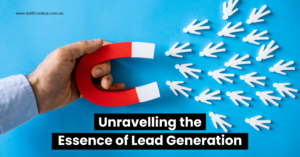
In the digital world, lead generations are your potential customers who express interest but are yet to be converted into paying clients.
- Crafting a lead generation strategy involves pinpointing prospects likely to transform into loyal customers, sparking their interest, and engaging them consistently.
- Your lead gen blueprint is about gathering pertinent data on potential clients who stand a good chance of joining your customer base. Yet, that’s merely the beginning.
- It’s imperative to devise strategies that target the ideal audience, captivate them with the uniqueness of your offerings to the point they’re willing to share their contact information and ensure they are nurtured with the right marketing resources to propel them further along the sales journey.
Foundations of a Robust Lead Generation Strategy
Every sustainable business recognises the essence of generating quality leads. The cornerstone of a successful lead generation strategy centres on the art of employing innovative methods, utilising optimal digital platforms, and applying tactical approaches to lure potential clientele. Essential to this is the precision in identifying the right audience, the wisdom in selecting potent digital channels and the creativity in crafting irresistible offers.
- Gather – The initial phase involves gathering information to assess the alignment of a potential customer with your B2B buyer persona. This entails considering factors such as demographics, behavioural patterns, and other relevant data.
- Attract – Following the information gathering; the next step is to offer a compelling incentive that encourages the pertinent prospect to share their contact details. In the realm of digital marketing, professionals refer to this as “lead magnets.”
- Assess – Once the prospect has shared their contact information and transitioned into a lead, you leverage this data to gauge the likelihood of this lead eventually becoming a customer.
- Segment – By categorising your lead list into distinct groups or segments, you can deliver personalised marketing content, address specific pain points and link leads to products or services that align with their interests
Need free templates for lead generation? Contact us!
A Quintessential Suite of Seven Lead Generation Methods

Across various terrains, from local startups to global conglomerates, success stories have one thing in common: a blend of both cutting-edge and time-honoured lead generation tactics that broaden their audience spectrum.
1.Chatbots: The Frontliners of Contemporary User Engagement
Once viewed as nascent technological curiosities, chatbots have transformed into indispensable tools in the modern user engagement playbook. Their evolution is a testament to how brands prioritise user experience. Not only are they proficient in guiding users seamlessly through a site, but they’re also adept at addressing detailed inquiries and even streamlining sales operations. Major platforms like Shopify utilise them to enhance customer service, underscoring their pivotal role.
2 Newsletters: The Ageless Technique for Lead Nurturing
Contrary to a lingering belief that newsletters are outdated remnants of the early internet, their potency in today’s digital landscape can’t be ignored. Modern industry behemoths, notably HubSpot, have accentuated the relevance of newsletters. These communications tools are pivotal in generating leads, delivering consistent value, and forging enduring connections with potential and existing customers.
3.Gated Content: An Alluring Proposition for Digital Natives
The digital consumer craves exclusive, high-value content. Catering to this, brands are increasingly employing gated content assets. These could range from exhaustive research reports and deep-dive e-books to tailor-made video presentations. By positioning such premium content behind a ‘gate’ that requires users to provide contact details, brands lay the foundation for a more intimate engagement trajectory.
4.Webinars & Virtual Symposiums: Dual Facets of Digital Engagement
Webinars and other digital events aren’t merely platforms for dispersing information. Their intrinsic value lies in their dual capacity. Renowned entities like Adobe leverage these platforms to disseminate knowledge and as formidable lead generation strategies. These sessions provide invaluable insights while gathering essential data from attendees that can be used to fine-tune future marketing initiatives.
5.Free Trials: The Epitome of Brand Confidence & User Persuasion
In the vast arena of brand-customer trust dynamics, offering a free trial stands out as a masterstroke. When giants like Canva extend a hand, allowing users to explore their premium features without an initial commitment, it often results in a win-win situation. Users get firsthand experience, and brands increase the likelihood of converting these trials into long-term associations.
6.Digital Assets: Illuminating Brands in the Digital Realm
Every image, video segment, or comprehensive infographic can be perceived as a potential brand ambassador in the visual-driven digital marketing era. When these digital assets are optimised with precision, they can dramatically enhance brand visibility across the digital spectrum. Several brands leveraging visual search capabilities exemplify the monumental potential of this approach.
7.Interactive Tools: Marrying Engagement with Audience Intel
Beyond their apparent entertainment quotient, quizzes, polls and raffles serve a dual purpose. Much like Buzzfeed, media entities deploy these tools for user engagement and as intricate mechanisms to glean more profound insights into audience preferences. Such intel is invaluable, informing content strategies that resonate more deeply with their target demographic.
8.Data Analysis: The Lynchpin of Strategic Evolution
Strategy without measurable results is akin to sailing without a compass. Every deployed tactic’s success hinge on tangible, quantifiable outcomes. It’s not merely about launching initiatives; astute businesses engage in perpetual cycles of assessment and refinement. Such an iterative approach ensures that strategies remain razor-focused on genuine, high-value conversions, driving consistent growth.
In summation, the digital domain’s myriad tools and tactics can be harnessed with surgical precision when brands remain committed to offering value and understanding their audiences. The evolution in lead generation strategies, from chatbots to intricate data analytics, showcases the dynamic nature of digital engagement and the constant drive towards perfection.
FAQS
1. What are lead generation strategies and why are they essential for modern businesses?
Lead generation strategies refer to companies’ methodologies and tactics to attract potential customers and capture their interest, often with the goal of converting them into paying clients. Given the hyper-competitive digital landscape, these strategies are crucial. They ensure businesses effectively reach their target audiences, offering them value and guiding them down the sales funnel.
2. How do SEO and content marketing factor into lead generation?
SEO (Search Engine Optimisation) and content marketing are intertwined components of a robust lead generation strategy. High-quality, SEO-optimised content improves a website’s visibility on search engines like Google, driving organic traffic. Meanwhile, content marketing provides valuable information, addressing potential customers’ needs and pain points. This combination can significantly boost engagement and lead capture rates when executed well.
3. Are chatbots a reliable tool for enhancing lead generation efforts?
Absolutely! Chatbots have emerged as a potent tool in lead generation strategies. They offer instant customer support, answer queries in real time, and can even assist in the initial stages of the sales process. By providing timely assistance, chatbots enhance user experience, increasing the likelihood of visitors engaging more deeply with a business or service.
4. How do webinars contribute to lead generation for high-end services?
Webinars are invaluable, especially for businesses offering high-end SEO and marketing services. They allow companies to showcase their expertise, provide insights, and interact directly with potential clients. Attendees must often register with their contact details, which businesses can use for follow-up communications and tailored marketing efforts.
5. Why are gated content assets effective in capturing leads?
Gated content assets, such as exclusive reports, e-books, or webinars, require visitors to provide contact information before accessing them. Given their premium nature, they act as a magnet for potential leads. Businesses offering high-end services can leverage these assets, offering detailed insights or advanced knowledge and enticing potential customers to provide their details in exchange.
6. How often should businesses evaluate and adjust their lead generation strategies?
Continuous evaluation is critical. The digital landscape, consumer behaviour, and SEO algorithms change frequently. Therefore, businesses should regularly assess the effectiveness of their lead generation strategies. At a minimum, a quarterly review is advisable. However, for optimal results, monthly evaluations, followed by necessary adjustments, can ensure that strategies remain aligned with business goals and market dynamics.
Conclusion
The digital landscape’s escalating competitiveness underscores the criticality of masterful SEO and lead generation strategies. By harmoniously amalgamating tried-and-tested techniques with avant-garde tactics, brands can attract, cultivate, and transform leads into loyal clientele. As the digital narrative unfolds, adaptability and staying up to date with current trends remain the dual pillars of perennial online triumph.
By understanding and implementing these lead generation strategies, businesses can remain at the forefront of their industry, effectively capturing and nurturing potential leads in an ever-evolving digital world.