
Zero-click searches refer to search engine queries conducted on platforms like Google, Bing, or Yandex, where users receive information directly on the search results page without being redirected to an external website. Currently, approximately 50 percent of searches conclude without users clicking on an organic search result. To gain comprehensive insights into zero-click searches and their significance in SEO, read ahead.
Understanding what is zero click is essential to grasp the concept of these searches and their impact on website traffic. Additionally, delving into Google featured snippets sheds light on the specific way search engines present information to users directly in the search results. By understanding these aspects, website owners and digital marketers can effectively navigate the evolving landscape of Google zero-click searches and optimise their content to maximise traffic and visibility
Statistics on Zero Click Searches
In June 2019, Jumpshot, a clickstream analysis service that is no longer operational due to data use and privacy concerns, conducted a comprehensive study on zero-click searches on Google.com in the US, encompassing both desktop and mobile searches.
The key findings revealed that more than half of all searches (50.3 percent) concluded without users clicking on any external content, leading to what is known as “zero click searches.” Only a small portion of searches resulted in clicks to organic content (5.3 percent) or paid advertisements (4.4 percent).
This significant trend of zero-click searches implies that most searches now fail to generate traffic for third-party websites beyond Google’s own services. Over the years, the prevalence of zero click searches has been steadily increasing in the US:
– 1st quarter of 2016: 43.1 percent
– 1st quarter of 2017: 46 percent
– 1st quarter of 2018: 47.5 percent
– 1st quarter of 2019: 49 percent
Furthermore, the analysis highlighted a higher occurrence of zero click searches among mobile device users, with 62 percent of all mobile searches falling into this category. In contrast, organic clicks accounted for merely 27.7 percent of mobile search queries during the same period.
This data underscores the growing impact of zero click searches and the evolving landscape of search engine results, particularly when accessed through mobile devices.
Google’s Advantage in Zero Click Searches
Google, the prominent search engine giant, is committed to providing its users with the best and quickest search results possible while encouraging them to remain within the “Google-verse” of its services for as long as feasible. This strategy has evident advantages for both users and Google itself. However, concerning digital marketing and search engine optimisation, it presents more challenges than benefits.
Google’s primary objective is to deliver rapid and accurate results, which fosters user trust and loyalty to its platform, making it their preferred search engine. By retaining users within its ecosystem, Google benefits from extended user engagement, as they spend more time interacting with Google’s own services and less frequently navigate away to external websites. This is advantageous for Google because it allows them to present targeted advertisements to users and potentially earn revenue from clicks on Google Ads and Google Shopping.
On the other hand, for digital marketers and SEO practitioners, this trend of zero-click searches presents certain disadvantages. As more searches conclude without users clicking through to third-party websites, there is a decline in organic traffic to external sites. This limits the opportunities for businesses to reach potential customers organically through traditional search results. Consequently, optimising content for featured snippets, knowledge panels, and other Google-specific elements becomes increasingly crucial for visibility and traffic generation.
To comprehend the growing prevalence of zero-click searches, it’s essential to understand the concept itself and its implications for SEO. Zero-click searches occur when users obtain the information they need directly from the search results page, without the need to click on any specific link. This behaviour is becoming more prevalent due to Google’s enhanced efforts in displaying featured snippets and other quick answer formats. As a result, users are finding the necessary information without leaving Google, leading to a higher number of zero-click searches.
For SEO practitioners, this trend highlights the significance of optimising content to appear in featured snippets and other enriched search result formats. While zero-click searches can benefit users seeking quick answers, it presents a challenge for website owners looking to drive traffic and gain visibility beyond the Google platform. Therefore, adapting SEO strategies to address the rising prominence of zero-click searches is vital to maintain a competitive edge in the digital landscape.
Strategies for Increasing Zero Click Searches at Google
The continuous introduction of various new SERP (Search Engine Results Page) features, such as widgets and informational elements, has contributed to a rise in zero-click searches. These features provide users with instant access to relevant information directly on the search results page, reducing the need for them to click through to external websites. Google’s Direct Answers and Knowledge Panel are examples of common SERP features that facilitate this user experience.
Addressing the optimisation for zero-click searches in SEO is crucial for businesses and website owners looking to maintain visibility and drive traffic despite this trend. To optimise for zero-click searches, focusing on attaining different types of featured snippets and knowledge panels becomes vital. Creating concise, well-structured content that answers specific questions clearly and directly can increase the chances of being selected for these enhanced result formats.
In the era of zero-click searches, strategies to increase organic clicks require a multi-faceted approach. One effective method is to target long-tail keywords and intent-driven queries that are more likely to generate clicks. By understanding user intent and creating content that satisfies their needs comprehensively, businesses can attract more organic clicks. Additionally, optimising meta descriptions and page titles can entice users to click on the organic search results by providing compelling and relevant information.
Search engines significantly influence zero-click search results by determining which content is eligible for featured snippets SEO and other SERP features. Algorithms analyse content relevance, structure, and user-friendliness to present the most appropriate information directly on the results page. Consequently, websites with well-optimised content and structured data are more likely to be chosen for these featured formats.
Overall, navigating the impact of zero-click searches in the digital landscape requires a balanced SEO strategy that accounts for both optimisation for featured snippets and knowledge panels, as well as strategies to increase organic clicks through targeted content and user-centric optimisations. Understanding search engine algorithms and adapting content accordingly is key to successfully addressing the challenges posed by the growing prevalence of zero-click searches.
Knowledge Panel Implementation
Google’s Knowledge Panel, which was traditionally an information tab primarily associated with entities like individuals, organisations, or businesses, has evolved into a widely used SERP feature. Nowadays, it extends beyond merely providing data about these entities and is frequently triggered as a rich result for various search queries.
For instance, searches related to health, entertainment, and other topics now often lead to the display of a Knowledge Panel. For example, a simple query like “capital Italy” can trigger the appearance of a Knowledge Panel with relevant and informative details about Italy’s capital city.
Direct Answer Integration
Google’s Direct Answer Box is a feature that offers precise answers to specific search queries related to celebrities, geography, history, and other information. It also provides direct answers for queries about the weather or stock market prices. Unlike Featured Snippets, Google’s Direct Answers solely present factual data and do not include any links to external third-party content.
The information within Direct Answers is sourced directly from Google’s own data, ensuring accuracy and reliability. For instance, a search query like “how old is the queen” will result in a direct answer provided by Google without the need to click through to any other website.
Utilising schema.org Markup
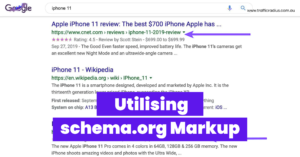
SEO professionals and webmasters have the opportunity to enhance their websites using schema.org, a valuable resource for embedding structured data mark-ups. This implementation enables search engine crawlers to easily convert website content into machine-readable data. By utilising schema.org, webmasters can specify which sentences are most suitable as answers for Voice Assistants to read in response to search queries.
They can also define the essential questions and corresponding answers related to a particular topic. Through this process, search engines are equipped to offer more accurate information and enhance the depth of details within their extensive databases.
SEO Tactics to Address Zero Click Searches
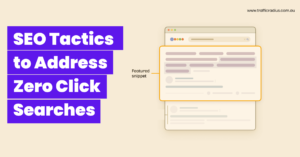
The SEO community finds itself divided over how to respond to the increasing prevalence of zero-click searches. As websites experience a loss of organic traffic to search engines like Google, which capitalise on traffic through ads and direct conversions, digital marketers face challenges in maintaining their traffic levels.
To navigate this landscape, SEO professionals must carefully scrutinise the topics and keywords they are optimising for. It’s crucial to assess whether Google’s search results already include SERP features like SEO Featured Snippets and featured snippets SEO or various types of Featured Snippets, such as Direct Answers or large-format Knowledge Panels.
If these features are present, it may be more prudent to redirect efforts to other SEO aspects. This could involve shifting the focus of a page or incorporating new content that caters to a different user intent. Prioritising long-tail keywords and providing content that offers additional value to search engine users are also essential strategies for securing sustainable traffic to their websites.
Best practices for dealing with zero-click searches in SEO campaigns include optimising for featured snippets examples to increase the chances of gaining visibility in search results. Additionally, diversifying SEO efforts and focusing on long-tail keywords can help target specific user intents and attract more organic clicks. Providing comprehensive and valuable content that satisfies users’ queries can encourage engagement and enhance the likelihood of capturing organic traffic despite the zero-click results trend.
Search engines play a significant role in influencing zero-click search results. Through complex algorithms, search engines determine which content is best suited for featured snippets and other SERP features. Factors such as content relevance, structure, and user-friendliness impact the selection process.
Websites that effectively optimise their content and employ schema.org mark-ups stand a better chance of being featured in zero-click search results. Understanding search engine algorithms and adjusting SEO strategies accordingly is critical for succeeding in the era of zero-click searches.