
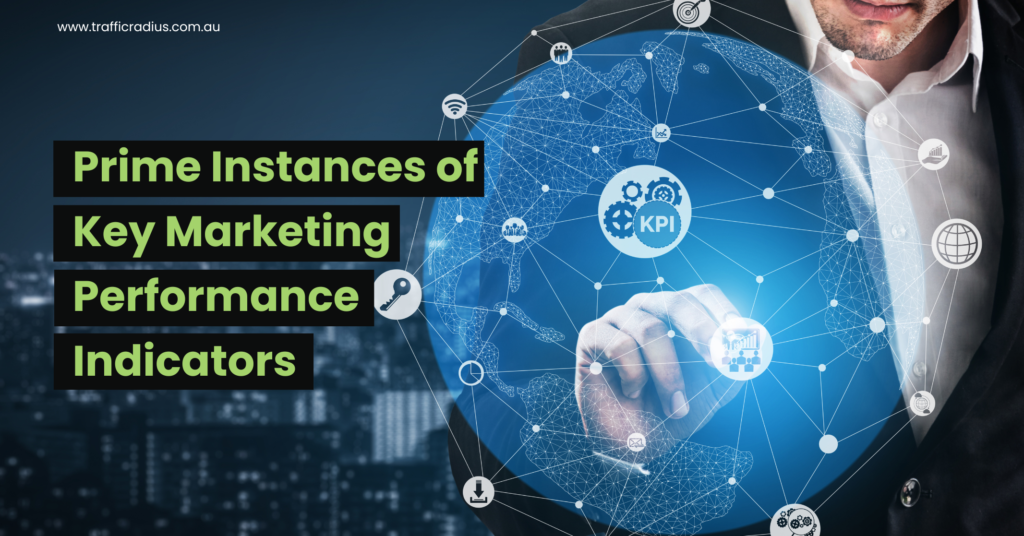
🎯 A Key Performance Indicator (KPI) serves as a compass 🧭, guiding businesses on their journey towards targeted marketing triumphs. These measurements paint a vivid picture 🖼️ of progress, leading the way to desired marketing goals. They’re not just metrics, they’re the heartbeats of success 💓, offering profound insights into multifaceted dimensions of a company’s performance.
🚀 Unlock the power of Marketing KPIs 📊, dive into real-world marketing KPIs examples 🌐, and harness the digital marketing KPIs 📈 to illuminate your path to achievement!
The Significance of Marketing KPIs
These are the important digital marketing KPIs in B2B sectors:
Evaluating Performance Metrics
KPIs empower organisations to pinpoint strengths and areas for growth 🌟. By analysing data, companies can steer their decisions towards enhancing campaigns 📊. Consistently monitoring these markers fuels improved outcomes 💪.
Ensuring Goal Consistency
KPIs provide a distinct focal point by delineating precise metrics 🎯. These metrics propel us towards objectives, whether short-term or long-term 🚀. This alignment ensures that marketing process KPI endeavours seamlessly sync with the broader business strategy 🌐
Enhancing Accountability and Assessment
Marketing KPIs B2B foster accountability within teams and departments 🔍. They enable managers to meticulously assess both individual and collective achievements 📊. This process empowers organisations to cultivate a culture of progress and ongoing enhancement by tethering employees to well-defined metrics 🌱.
Efficient Resource Allocation
KPIs play a pivotal role in resource allocation, encompassing financial and human resources alike 📊💼. They illuminate the effectiveness of various B2B marketing KPIs endeavours, guiding businesses towards optimal outcomes. By deciphering the best-performing activities, companies can fine-tune resource distribution, enhancing their ROI optimisation 🌟💰.
Master the Realm of AI-empowered Digital Marketing
If you’re looking forward to mastering your digital marketing strategies for brand awareness KPIs, then contact Traffic Radius soon!
Prime Instances of Key Marketing Performance Indicators
Here are a few of the prominent marketing KPIs examples that businesses frequently monitor to evaluate their marketing effectiveness:
Conversion Rate Measurement
The conversion rate stands as a vital gauge, quantifying the proportion of website visitors who fulfil specified actions, be it a purchase, newsletter sign-up, or completing a contact form. A lofty conversion rate underscores a triumphant marketing approach, engaging content, and a user journey devoid of obstacles. Delving into this metric enables businesses to spot zones ripe for website and marketing enhancements, elevating the potential for increased conversions. 📈💼
2:Cost of Acquiring Customers (CAC)
The Customer Acquisition Cost (CAC) unveils the resources dedicated to securing fresh patrons. It computes the mean expenditure a company allocates per newly acquired customer. This metric steers business towards cost-efficient marketing endeavours, aiding budgetary control. By observing CAC, enterprises fine-tune their financial outlay to ascertain efficacy.
A diminished CAC signifies adept customer procurement methods, while an elevated CAC necessitates enhancements to refine marketing outlays and bolster the efficiency of customer acquisition. ⚖️📊💰
3: Return on Investment (ROI) Calculation
Return on Investment (ROI) stands as a cornerstone metric for gauging the profitability of marketing endeavours. It quantifies the revenue yielded about the incurred marketing costs.
A favourable ROI signifies fruitful marketing endeavours, reaping profitable dividends. Conversely, a negative ROI signals a call for strategy adjustments. Businesses glean insights into the most lucrative marketing endeavours through ROI analysis, thereby optimising resource allocation for utmost profitability. 📈💰🔍
4: Website Traffic Monitoring
Website traffic encompasses the influx of visitors gracing our digital domain. This influx becomes the bedrock for informed decisions, and nurturing website enhancement. By unearthing traffic origins and pinpointing high-traffic pages, businesses pave pathways to amplify performance. Amplified website traffic augments the avenue for converting visitors into patrons, propelling visibility to loftier heights. 🌐📊🚀
KPI 5: Click-Through Rate (CTR) Analysis
Click-Through Rate (CTR) quantifies the percentage of individuals who engage with an ad by clicking on its post-viewing. This metric is pivotal for unravelling the efficacy of online advertising crusades. A soaring CTR signifies an ad’s prowess in captivating and seizing the audience’s intrigue. 🖱️📈👁️🗨️
Harness GenAI and ChatGPT for Marketing Excellence
Learn more about AI for marketing excellence from us!
KPI 6: Engagement on Social Media Platforms
Social Media Engagement dissects the extent of user interaction and engagement with a brand’s social media content. This yardstick encompasses indicators such as likes, comments, shares, and follows. Noteworthy considerations include:
– Likes, comments, and shares signify an active and invested audience, amplifying the refinement of brand messaging.
– Tracking follower growth affords valuable intel into the brand’s marketing popularity, illuminating its resonance.
– Marketers can dissect diverse content performance (e.g., videos, textual posts) to mould content strategies for continual enhancement. 📱💬📊
KPI 7: Assessing Email Open Rate and Click-Through Rate
Email Open Rate gauges the proportion of recipients who open a marketing email. Marketers, such as ourselves, also grasp the significance of Click-Through Rate (CTR), measuring the percentage of recipients who click on embedded links within the email. To boost these metrics, consider these strategies:
– Crafting captivating subject lines grabs attention and heightens email open rates.
– Tailoring content to be personalised and pertinent amplifies the likelihood of click-through engagements.
– Analysing email efficacy across varied segments and target demographics yields invaluable insights, nurturing continuous refinement. 📧📊🎯
KPI 8: Determining Customer Lifetime Value (CLTV)
Customer Lifetime Value (CLTV) calculates the cumulative revenue garnered from a customer throughout their entire engagement with a business. This metric serves as a compass to pinpoint the most valuable patrons by discerning their CLTV. Strategies to enhance CLTV include:
– Cultivating enduring customer relationships through precision-focused marketing endeavours.
– Elevating CLTV through adept implementation of upselling and cross-selling tactics.
– Elevating CLTV through customer contentment and fostering loyalty via well-designed programs. 📈🤝💼
KPI 9: Sustaining Customer Retention Rate
Customer Retention Rate gauges a business’s prowess in preserving its current clientele across a specific timeframe. This metric proves invaluable for scrutinising customer loyalty and identifying areas necessitating enhancement.
A robust customer retention rate signifies triumph in marketing strategies, solidifying enduring customer bonds. Recommendations to bolster retention include:
– Delivering exceptional customer service and crafting personalised interactions for heightened retention rates.
– Strategically emphasising customer satisfaction and deploying loyalty initiatives, coupled with proactive communication.
– Scrutinising the causes behind customer attrition offers insights for strategic tweaks, ultimately enriching the retention approach. 📊🤝🏆
Execute Ad Campaigns across Google, YouTube & Facebook
Explore Traffic Radius to run your ad campaigns!
KPI 10: Gauging Brand Awareness
Brand Awareness mirrors the degree to which the intended audience acknowledges and retains knowledge about a brand. This can be quantified via surveys, social media references, or search activity. Vigilantly tracking brand awareness furnishes businesses with insights into campaign efficacy, facilitating amplified brand recognition and heightened visibility. Strategies to elevate brand awareness encompass:
– Brand awareness serves as the bedrock for customer confidence, brand reputation, and market sway.
– Dissecting brand awareness within distinct demographics guides precise marketing pursuits.
– Gauging competitor brand awareness empowers businesses to set a yardstick for their brand prominence. 🌍🔍📊
KPI 11: Cost per Lead (CPL) Calculation
Cost per Lead (CPL) ascertains the mean expenditure required for cultivating an individual lead. This calculation involves dividing total lead generation expenses by the lead count. A diminished CPL signifies streamlined lead-generation endeavours, concurrently optimising prudent budget allocation. Strategies for enhancing this metric encompass:
– Streamlining lead generation channels and tactics to curtail CPL.
– Persistent experimentation and enhancement unveil lead-generation avenues boasting the greatest Return on Investment (ROI).
– Scrutinising CPL in tandem with lead conversion rates yields insights into lead calibre and campaign potency. 📊💰👥
KPI 12: Identifying Marketing Qualified Leads (MQL)
Marketing Qualified Leads (MQLs) encompass potential clientele displaying interest in a company’s offerings yet remain on the cusp of committing to a purchase. Quantifying MQLs unveils the efficacy of lead nurturing endeavours and aligns marketing and sales units. Pertinent insights and recommendations include:
– MQLs, nurtured through customised content and interactions, hold the potential to magnify conversion rates.
– Forging a strong alliance between marketing and sales departments streamlines seamless lead transition, thereby optimising conversion rates.
– Scrutinising the conversion rate from MQLs furnishes invaluable glimpses into lead generation quality, while simultaneously gauging marketing potency. 🎯🔗📊
KPI 13: Tracking Sales Revenue
Sales Revenue quantifies the aggregate monetary value derived from sales efforts propelled by top marketing KPIs endeavours. This metric illuminates the business’s sales achievements and underscores the bottom-line influence of marketing actions. By scrutinising this revenue, organisations gauge the Return on Investment (ROI) of their marketing campaigns. Pertinent considerations entail:
– Harmonising marketing endeavours with sales objectives yields a direct and potent influence on revenue generation.
– Dissecting revenue across varied marketing channels unveils the most lucrative sources.
– Contrasting revenue garnered from repeat customers versus new clientele offers insights into the efficacy of customer loyalty and retention strategies. 💰📈🔍
KPI 14: ROI of Marketing Campaigns
Marketing Campaign ROI quantifies the return on investment exclusive to individual marketing endeavours. This metric unveils prime contributors to substantial returns and pinpoints areas warranting refinement. By rigorously assessing this measurement, businesses optimise resource allocation and fortify marketing efficacy. Vital insights include:
– Meticulously monitoring costs and revenue linked to distinct marketing campaigns fosters accurate ROI assessment.
– Identifying high-impact campaigns enables strategic resource redistribution while pruning underperforming ventures.
– Charting campaign ROI across time facilitates trend identification and steering informed marketing strategy adjustments. 📊📈🚀
KPI 15: Measuring Churn Rate
The Churn Rate represents the proportion of customers who discontinue using a product or service within a specific timeframe. This metric serves as a crucial gauge for assessing customer contentment and loyalty.
To enhance customer retention and satisfaction, businesses can undertake the following strategies:
– Ongoing enhancement of products, services, and customer experiences serves to diminish the churn rate.
– Scrutinising the factors contributing to customer churn unveils pain points and sources of discontentment.
– Tailoring retention strategies based on customer segments fosters reduced churn rates. 📉🤝📊
Ready to Elevate Your Marketing Proficiency?
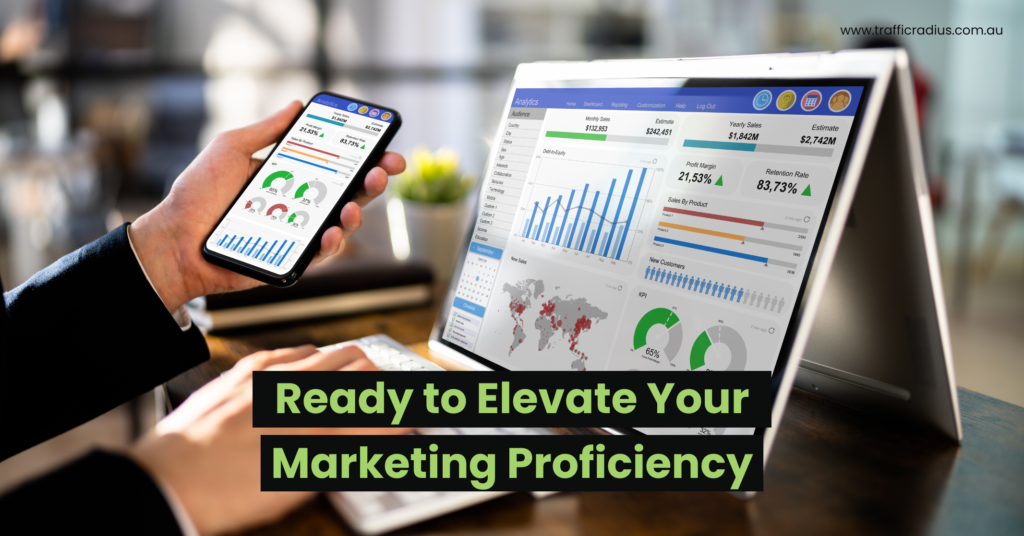
📊 Marketing KPIs stand as vital barometers, gauging triumphs within marketing strategies and campaigns. They bestow upon businesses invaluable insights spanning diverse performance realms. This treasure trove of data fuels judicious decision-making and fosters perpetual enhancement.
⚙️ Unlocking the potential for escalated marketing prowess and goal attainment lies within the grasp of organisations. By delving into this spectrum of KPIs, businesses can chart a course toward enduring expansion. 🚀
🌐 Traffic Radius, your seasoned companion on the B2B marketing KPIs landscape, harmoniously blends with these dimensions. Elevate your endeavours with our expertise in understanding B2B marketing KPIs, amplifying your knowledge of different types of marketing KPIs, unravelling the intricacies of click-through rates, and unleashing strategies for mastering the top echelons of marketing KPIs. 📈🔍📣
Frequently Asked Questions
What should be the frequency of monitoring marketing KPIs?
The cadence of monitoring marketing KPIs hinges on various elements, encompassing business characteristics, campaign durations, and industry dynamics. The velocity of shifts within your sector also plays a role. Consistent tracking ensures a vantage point over marketing achievements, facilitating timely adaptations to strategies and perpetual optimisation.
Are there established industry benchmarks for marketing KPIs?
Industry benchmarks for marketing KPIs indeed exist. They furnish businesses with yardsticks for juxtaposing their performance against rivals. These benchmarks exhibit diversity across sectors and can be unearthed via industry reports, surveys, and specialised publications. Each business, being a distinctive entity, crafts its distinct constellation of KPI benchmarks.
How do I go about selecting the most fitting KPIs for my objectives?
Select Key Performance Indicators (KPIs) that harmonise seamlessly with your business objectives, precisely gauging the pivotal elements steering the triumph of your project or organisation.