
Optimising your conversion funnels can be the pivotal factor between your website flourishing in profits or barely scraping by. Streamlining the user journey with brief yet compelling steps can significantly elevate your conversion rate.
Ultimately, this translates to a higher ROI for your marketing endeavours.
You haven’t integrated a structured conversion funnel into your website. However, it’s evident that your audience transitions from being “prospects on the horizon” to “committed buyers.”
Whether your audience treads along a well-laid path or ventures on an exploratory spree, grasping their journey is imperative. Recognising their steps via conversion funnel analysis empowers you to identify interventions, ensuring they seamlessly glide through the funnel.
Understanding conversion metrics becomes your compass in this dynamic, guiding every optimisation endeavour.
Understanding the Concept of a Conversion Funnel
What is a Conversion Funnel?
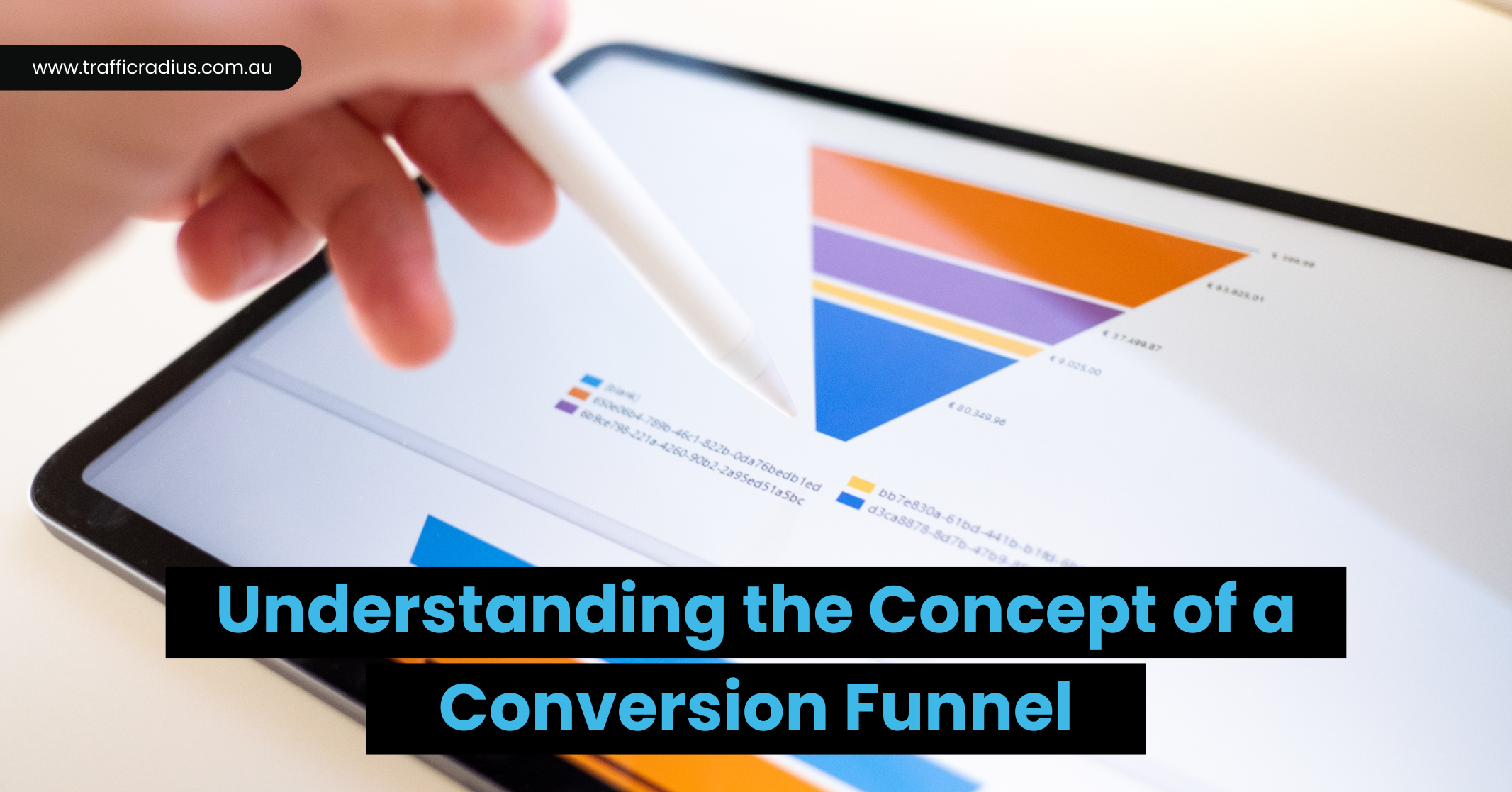
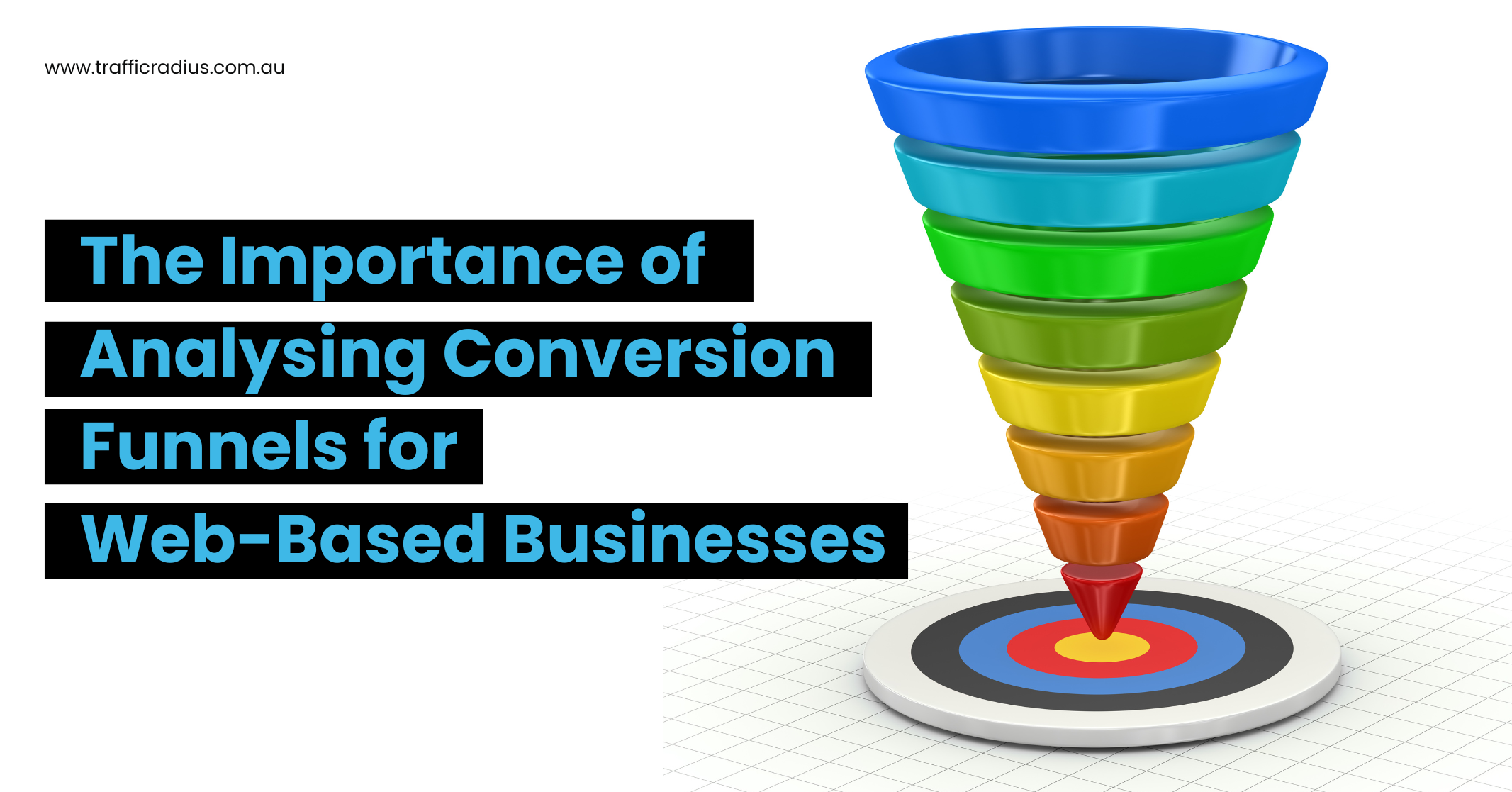
A conversion funnel paints a picture of the trajectory visitors—or leads—take towards achieving a desired outcome on your website. Imagine a funnel, wide at the top and narrow at the bottom. The expansive top symbolises the influx of traffic to your site. However, only a subset of this traffic transitions to the bottom, becoming loyal customers.
In traditional marketing, attracting prospects to a site might start with various touchpoints, be it a riveting online ad, a podcast mention, or even a classic television commercial. At these moments, potential customers get their initial taste of your brand, sparking brand awareness.
However, a conversion funnel zeroes in on the specific journey visitors embark on while on your website, a concept indispensable to digital-centric ventures such as eCommerce and online retail.
The Importance of Analysing Conversion Funnels for Web-Based Businesses
Diving deep into conversion funnel analysis is the key to boosting your site’s conversion rate. You gain actionable insights by understanding where potential consumers deviate from the funnel. For instance, if users struggle to locate their desired product in the eCommerce world, they might pivot to a competitor’s website that promises a more streamlined browsing experience. If, however, your website’s checkout page lags, you’ll observe a stark drop in conversions during the payment phase.
A meticulous conversion funnel analysis pinpoints the bottlenecks where visitors falter or stray, deviating from the intended path. Recognising these “pain points” is the cornerstone of effective sales funnel optimisations.
Key Components of a Conversion Funnel
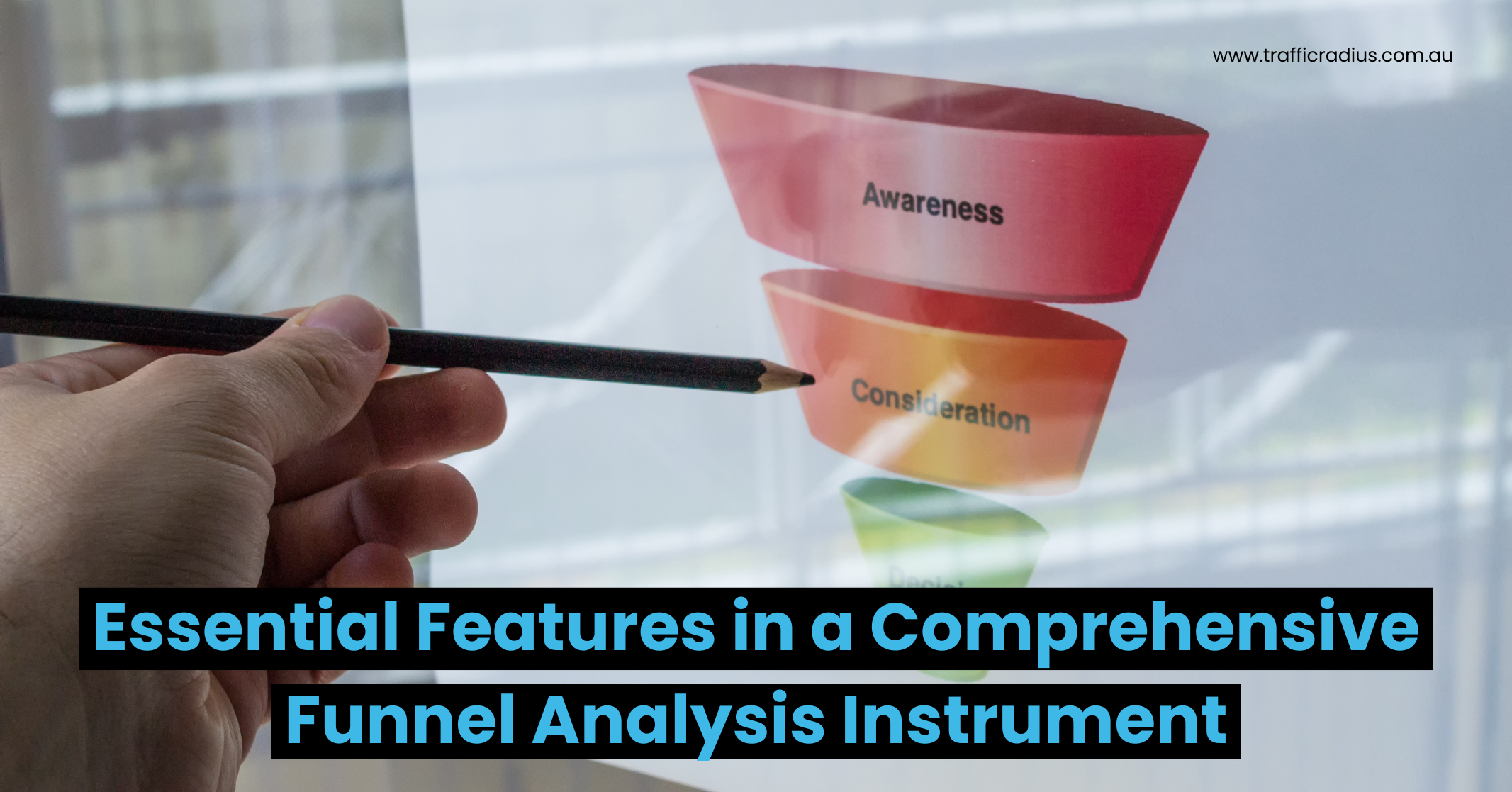
Conversion funnels aren’t one-size-fits-all; they vary based on industry and business nature. A standard and relatively simplistic model, for example, breaks the journey down into three core stages:
- Awareness: The potential customer becomes conscious of your brand or product.
- Consideration: They delve deeper, evaluating whether your offering meets their needs.
- Decision: A resolution is made, culminating in a purchase or sign-up.
However, more granularities might be beneficial when executing a conversion funnel guide. A more detailed rendition of this journey could encapsulate:
- Awareness: Introduction to the brand or product.
- Consideration: Delving into the specifics and alternatives.
- Evaluation: Analysing the pros and cons.
- Purchase: Making the actual purchase.
- Loyalty: Returning for repeat purchases or engaging further with the brand.
For sectors like eCommerce and retail, the types of funnels that might appear more abbreviated:
- Step 1 – Awareness: Visiting the site.
- Step 2 – Interest: Adding product(s) to the cart.
- Step 3 – Decision: Entering payment credentials.
- Step 4 – Action: Finalising the purchase.
Online travel agencies or platforms might visualise the process as follows:
- Step 1: Searching for options.
- Step 2: Comparing and selecting the ideal package or flight.
- Step 3: Entering payment details.
- Step 4: Finalising the purchase and exploring add-ons.
Establishing Objectives for Enhancing Your Conversion Funnel
Crafting a robust sales funnel optimisation strategy begins with a broad perspective. Visualise your target audience. Establish tangible milestones for their journey, then dissect each phase, measuring testing, and refining.
Picking the Most Relevant Metrics
Kickstart your endeavour by crystallising your conversion goals, reflecting your overarching business objectives. Typically, these revolve around revenue. Hence, your pivotal conversion rate metrics should pivot on activities driving revenue. Map out your funnel stages and earmark the critical engagement metrics. These metrics should resonate with your conversion aspirations and signify a vital juncture in a funnel phase. Here’s a smattering of metrics to monitor:
- Monthly Unique Visitors
- Pages per Visit
- Visitor-to-lead and lead-to-customer conversion rates
- Quote/trial/demo request rates
- Sales accepted leads percentage
- Average cost per sale
- ROI on advertising
- Revenue per visitor
- Average order value
- Bounce rate
Leveraging Analytics to Boost Website Conversions
Now, the groundwork meets action. Identify pages brimming with traffic but plagued with high exit rates—these signal stages where visitors abandon the journey. Survey how users meander through these pages, discern potential points of confusion and ensure CTAs stand out. Based on these findings, instigate improvements and run comparative A/B tests.
Leveraging advanced analytics tools can unravel nuances about user behaviour on high-exit pages. Tools offering heatmaps, scroll maps, and more can illuminate visitor navigation patterns. Another potent tool entails session recordings, providing a first-person perspective of the user’s journey.
The Necessity of Sophisticated Tools in Streamlining Conversion Funnel Enhancement
Access to granular, actionable data is non-negotiable to realise your ambitions and amplify your conversion rate. A cutting-edge funnel analysis tool buttresses your optimisation strategy, offering dependable metrics from which you can track, evaluate, and derive insights.
Essential Features in a Comprehensive Funnel Analysis Instrument
To elevate your conversion funnel strategy, picking the right tool is paramount. Here’s a checklist to guide your decision:
- Exceptional Tracking: Does the tool offer unparalleled tracking features?
- Diverse Website Analysis: Can it scrutinise multiple websites across varied domains?
- Industry Insights: Does it share insights about industry standards and average benchmarks?
- Data Visualisation: Are the data presentations intuitive and easy to decipher?
- Data Sharing: Can you conveniently share and export data for internal use?
- Integration Capabilities: Does it support seamless integrations with other primary and third-party platforms?
A tool equipped with these capabilities will provide accurate data and make your funnel optimisation strategy more robust.
Benchmark Against Rivals – Outpace the Competition
Even with a smoothly running site, how does it measure against the industry’s average conversion rate? Especially in cut-throat sectors, understanding “competitor analysis” is essential. A slight shift can immensely influence customer dynamics.
By undertaking competitive benchmarking, you can spot innovative strategies deployed by competitors. This helps you stay updated with the latest trends and ensures you’re always a step ahead.
Segmenting by Category – Concentrate on Your Enhancement Tasks
With vast online businesses spanning multiple categories, making apt comparisons is crucial. Always ensure you make apples-to-apples comparisons and do not confuse them with a mixed fruit basket.
Filtering results based on your business category is strategic. This approach ensures you’re “focusing your optimisation activities” where they matter the most.
Enhancing Stickiness – Bolstering Customer Retention and Brand Recognition
A key metric in understanding “customer loyalty” is evaluating the stickiness of your website. This reflects the average number of days a user purchases in a month compared to the total purchases made on the site.
A higher value indicates frequent return purchases, implying intense customer satisfaction. If the stickiness quotient is lower, it necessitates deep diving into reasons and strategies to enhance retention marketing. After all, this is a priceless gauge of customer contentment and “brand awareness”.
A Dive into Website Conversion Funnel Using the Travel Sector as a Model
In sectors like travel, the conversion funnel typically appears more streamlined. A granular analysis becomes indispensable with stiff competition, especially among major platforms.
Consider an online reservation platform as an illustrative example. Here, every metric signifies a pivotal phase in the funnel, guiding the customer from initial search to finalising their holiday booking:
- Discovery: Users begin their search for potential destinations or accommodations.
- Comparison: They compare various options, checking reviews and prices.
- Booking: After making a choice, they proceed to make a reservation.
- Checkout: This involves entering payment details.
Completion: Users finalise their purchase, and this stage often comes with “purchase and upsell” opportunities, such as room upgrades or additional amenities.
Businesses can optimise the user experience and boost conversions by understanding each stage in detail.
Stage 1: Exploring (Beginning of the funnel)
Step 1: Initial Search (Top of the Funnel)
- At this primary stage, there are pivotal metrics that throw light on user engagement:
Branded Searches:
- Metric: What is the volume of daily/weekly/monthly impressions specific to your brand? Make sure to filter this by region.
Website Visitors:
- Metric: How many users visit your website daily, weekly, or monthly?
Referral Traffic:
- Metric: Assess the magnitude of traffic sourced from referrals and pinpoint their origin websites.
Stage 2: Assess and Choose
Here, visitors use a comparative analysis to select their desired service, often influenced by price, dates, and duration.
- Metric: Key engagement markers like Average Visit Duration, Website “stickiness”, and Pages per Visit offer invaluable insights.
Stage 3: Input Information (Decision-making point)
- At this stage, visitors are prompted to provide their details. However, not every user sees it through.
- Metric: Calculate the percentage of users initiating and concluding the user registration process.
Stage 4: Finalise Transaction and Additional Offers
- Concluding Purchase and Seizing Upsell Opportunities (Bottom of the Funnel)
- This terminal stage is a melange of two purchase prospects:
Flight Reservations:
- Metric: Gauge the conversion rate and trace the evolution of converted visits over distinct time frames and regions.
Upsell Chances:
- Metric: Ascertain the number and proportion of “upsell opportunities” like car hires or supplementary perks.
To refine your strategy, designate specific targets for every metric. After a predetermined period, say a month, you’ll discern the user progression through the funnel and identify stages that might not meet your targets. The key is to delve deeper, employing tools to pinpoint and rectify shortcomings.
Adeptly segmenting and analysing your results—by marketing channels, devices, time frames, locations, and more—provides a clear lens. Using “competitor benchmarks” can elucidate prevalent trends, efficiently directing your optimisation energies.
Wrapping Up
Grasping the intricate fabric of an efficient conversion funnel is pivotal for thriving in the online business arena. As you set sail, define clear objectives, leverage the power of online analytical tools, and constantly calibrate based on your primary competitors. Adjust and iterate your strategies for better outcomes.
Keen on learning how to finetune your conversion funnel optimisation blueprint? Explore Traffic Radius‘ Conversion Analysis section and arrange a comprehensive consultation with our seasoned experts.
Frequently Asked Questions
How can you enhance the efficiency of the conversion funnel?
Identifying and targeting customer segments that showcase a conversion rate superior to the norm.
What purpose does a conversion funnel serve?
The conversion funnel graphically represents the journey of visitors (or potential clients) as they transition towards a conversion.