

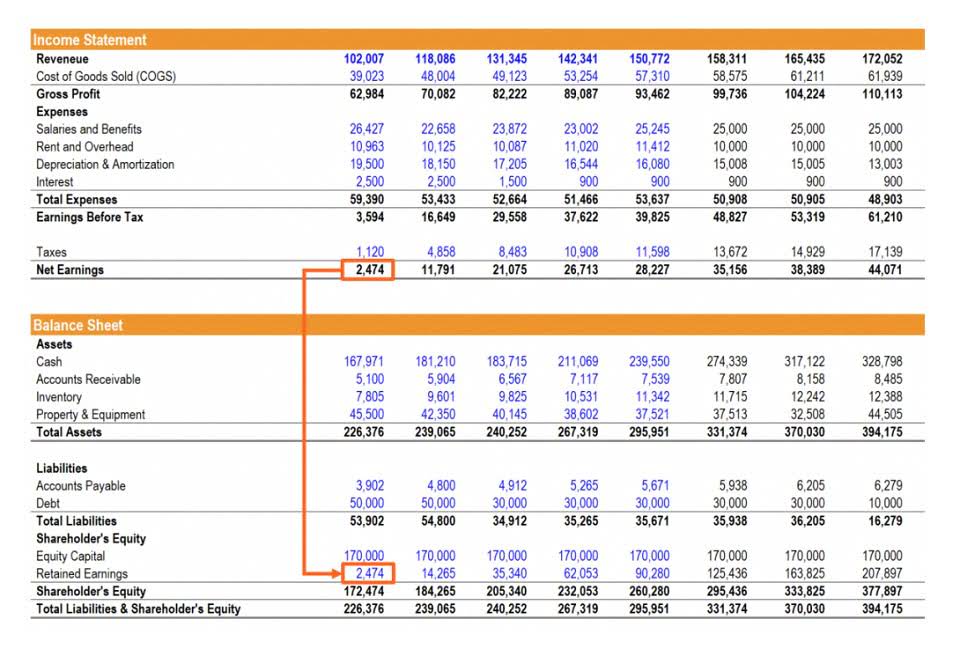
This can involve negotiating better terms with current lenders or seeking alternative financing arrangements. It represents the total cost of interest payments a company must make on its outstanding debt. In a nutshell, it indicates the company’s total income before income taxes and interest payments are deducted. A high TIE ratio signals that a company has ample earnings to pay off its interest expenses, which generally denotes strong financial health. Additionally, a strategic debt restructuring aimed at extending maturities or reducing interest rates can improve a company’s TIE, enhancing its financial flexibility and perceived creditworthiness.
- The better the ratio, the stronger the implication that the company is in a decent position financially, which means that they have the ability to raise more debt.
- Find out how GoCardless can help you with ad hoc payments or recurring payments.
- Investors use this metric when a company has a high debt burden to analyze whether a company can meet its debt obligations.
- They have contributed to top tier financial publications, such as Reuters, Axios, Ag Funder News, Bloomberg, Marketwatch, Yahoo! Finance, and many others.
What’s an Example of TIE?
In our completed model, we can see the TIE ratio for Company A increase from 4.0x to 6.0x by the end of Year 5. In contrast, for Company B, the TIE ratio declines from 3.2x to 0.6x in the same time horizon. Here, Company A is depicting an upside scenario where the operating profit is increasing while interest expense remains constant (i.e. straight-lined) throughout the projection period. While there aren’t necessarily strict parameters that apply to all companies, a TIE ratio above 2.0x is considered to be the minimum acceptable range, with 3.0x+ being preferred.
Using Earnings Power Value: An Accurate Financial Metric
It’s worth mentioning that the accuracy of financial data that a company uses to calculate their TIE ratio place a significant role in the correct assessment of their financial position and decision-making. At this point, it can be challenging for businesses, especially those having to deal with large volumes of transactions from various sources to account for them correctly. Generally speaking, a higher Times Interest Earned Ratio is a good thing, because it suggests that the company has more than enough income to pay its interest expense. A solvent company has little risk of going bankrupt, and this is important to attract potential debt and equity investors. The EBITDA TIE ratio includes depreciation and amortization in the earnings figure, which provides a different perspective on a company’s operating performance and ability to service debt. If the TIE ratio is below 1, it indicates that the company is not generating sufficient revenue to cover its interest expenses, pointing to potential solvency issues.

Creditworthiness assessment
In theory, a Times Interest Earned Ratio of 2.5 or higher is considered acceptable, and a TIER of less than 2.5 suggests that a company’s debt burden may be too high. Keep in mind that not all companies have debt, and as a result, not all companies will have an interest expense. For example, this would be the case if a company is financed entirely through equity, as most early ventures or growth stage companies are. From our example, it’s clear that Steady Industrial Corp., with a TIER of 8, is better positioned to meet its interest obligations compared to Growth Tech Ltd., which has a TIER of 5. This indicates that Steady Industrial Corp. has a stronger financial position when servicing its debt. Company B may not be in a position to take on any additional debt obligations.
Operating Income Calculation (EBIT)
Investors use this metric when a company has a high debt burden to analyze whether a company can meet its debt obligations. Hence, investors sometimes consider EBITDA (earnings before interest, taxes, depreciation, the times interest earned ratio provides an indication of and amortization) as an alternative to gain a broader view of a company’s financial health. Times interest earned ratio is a solvency metric that evaluates whether a company is earning enough money to pay its debt.
For example, your firm may email customers when an invoice is 30 days old and call clients if an invoice reaches 45 days old. Attempt to negotiate better terms on leases and other fixed costs to lower total expenses. These two liquidity ratios are used to monitor cash collections, and to assess how quickly cash is paid for purchases. A December 3, 2020 FEDS Notes, issued by the Federal Reserve, summarizes S&P Global, Compustat, and Capital IQ data in Table 2 for public non-financial companies.
TIE and Long-Term Sustainability

Again, there is always more that goes into a decision like this, but a TIE ratio of 2.5 or lower is generally a cause for concern among creditors. Simply put, your revenues minus your operating costs and https://www.bookstime.com/articles/how-to-calculate-sales-margins expenses equals your EBIT. In a perfect world, companies would use accounting software and diligence to know their position and not consider a hefty new loan or expense they couldn’t safely pay off.
- To better understand the financial health of the business, the ratio should be computed for a number of companies that operate in the same industry.
- A company’s ability to meet its interest obligations is an aspect of its solvency and an important factor in the return for shareholders.
- Perhaps your accounting software or ERP system automatically calculates ratios from financial statements data.
- As you can see from this times-interest-earned ratio formula, the times interest earned ratio is computed by dividing the earnings before interest and taxes by the total interest payable.
- You can’t just walk into a bank and be handed $1 million for your business.
- This ratio can be calculated by dividing a company’s EBIT by its periodic interest expense.