
Content marketing is not a luxury; it’s a necessity, especially for small businesses. In today’s digital landscape, quality content can be your ticket to brand visibility, customer engagement and business growth.
Why is Content Marketing Important for Your Business?
Drives Organic Traffic: The right content can enhance your SEO and bring organic traffic to your website.
Builds Customer Loyalty: Quality content can educate and engage your audience, making them loyal customers.
Cost-Effective: Compared to traditional marketing strategies, content marketing offers better ROI.
Credibility and Authority: Offering valuable content establishes your brand as an authority in your industry.
Now, let’s delve into the nitty-gritty of content marketing for small businesses with a few essential tips.
The Imperative of Content Marketing for Small Businesses
In an oversaturated market, content marketing gives you a fighting chance to be noticed. Whether you want to meet your consumer’s expectations, seek information before making decisions or enhance customer relationships, everything is possible with content marketing. Remember, quality content enables you to maintain an ongoing dialogue with your customers.
The Upsides of Crafting Quality Content
Good content, when optimised, affects your SEO positively. It can help you get improved conversion and move your audience through the sales funnel. As quality content enhances your brand’s profile, you can use content to raise brand awareness.
Why Content Marketing Isn’t Just a ‘Nice-to-Have’ for Your Business?
- Differentiate Your Business: The internet is chock-a-block with companies vying for attention. Your content can set you apart by reflecting what your brand is all about.
- Develop Your Brand: When you’re not just selling but sharing valuable insights, you’re encouraging people to have a yarn about your business. Now, that’s brand-building for you.
- Connect Directly with Customers: Customers are not just dollar signs. Your blog, social media and newsletters are more than platforms; they’re meeting spots to catch up with your audience.
- Attract Organic Visitors: Forget being dependent on fluctuating ad costs. A well-optimised blog acts like a boomerang, bringing customers back to you without constant spending.
Significance of content marketing KPIs:
These key performance indicators are specifically used to evaluate the effectiveness of your content marketing strategy. By assessing the indicators, you can track and monitor the performance of your content strategy. In this content marketing guide, you will get all the information you need to formulate and implement your next strategy, enabling you to reach your content marketing goals and refine your content strategy.
Timing and Tactics for Small Business Content Initiatives
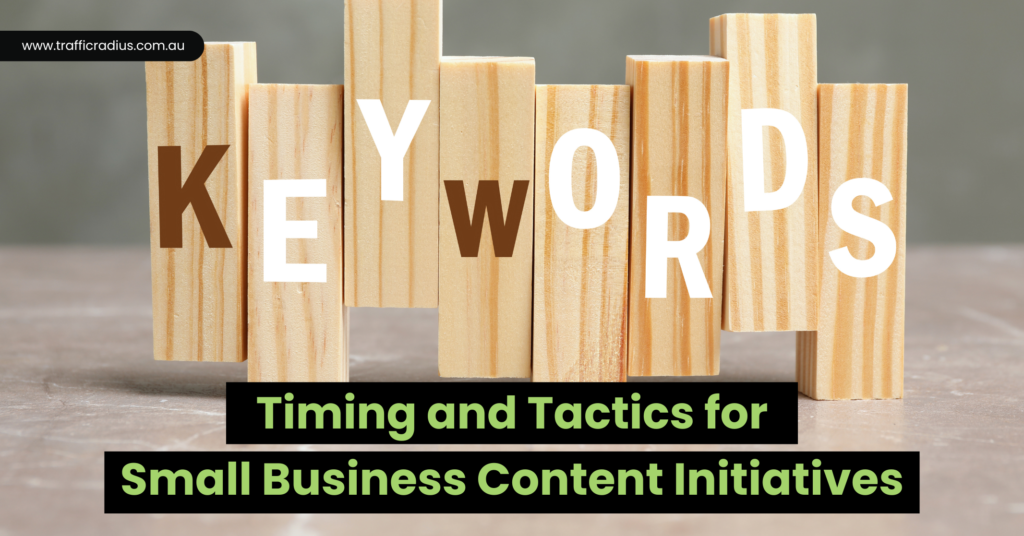
During the early stages, begin with keyword research and a content marketing strategy even before your business is fully operational. You can also use other online mediums and tools according to the marketing assets you choose, such as blog articles, podcasts or case studies.
Content Marketing Strategy: What to Know?
Online competition is fierce, right? But guess what? Your content can make you the life of the party by showcasing what your brand is about. Don’t know how? No problem: Before you even start formulating the content marketing strategy, answer these three big questions:
- What’s your niche? What do you know inside and out? That’s what your content topics should focus on.
- Who is your audience? What keeps your audience up at night? Use your content to answer their burning questions.
- Which channel should you use? Which channel does your target audience utilise? That’s where your content should be, too.
Laying a Solid Foundation for Content Marketing
If you’re in a rush to push out content, slow down. Your content marketing strategy isn’t a sprint; it’s a marathon. It won’t work if the other moving parts of your business aren’t well-oiled and ready to go.
What You Need?
- Your Website: Got to be slick for both humans and Google.
- Design and Copywriting: You need a look and a voice, mate.
- Closing the Deal: Got email marketing ready for your downloadable content and “Call to Action” buttons on your blog?
- Keeping Score: Are you using Google Analytics, with event tracking and all, to see how you’re doing?
Write Down Everything

You know how Aussies love an excellent footy game? Well, the teams don’t just run out and start kicking. They have a game plan. So should you. Businesses with a well-documented website content strategy usually score goals, while those without are left chasing the ball. Here, what you need are a few well-formulated content ideas.
Here’s what you’ve got to figure out:
- Who you’re interacting with (your audience)
- What you want to get out of it (goals and metrics)
- What you’re going to talk about (content topics)
- How you’re going to say it (content formats, for example- Podcasts, case studies or blog articles)
- Where you’re going to shout it out (content distribution channels)
Share a Yarn: Storytelling That Resonates
Storytelling isn’t just for kids; it can be the cornerstone of your content marketing strategy. Here, you need to follow content marketing tips, content marketing your brand’s journey, its values, its ups, and its downs in a way that will strike a chord with your audience. This is how you stand out regarding content marketing for small businesses.
Resources and Planning
You’ve got a game plan, but what about the resources? Here’s what you need to think about:
Your Team: Who’s doing what? Whether it’s SEO, copywriting, or design, everyone’s got a part to play.
Your Toolbox: You’re going to need some help. Tools for SEO, planning, writing and a Content Management System are essential.
In Australia, nearly half of small businesses spend between $1,000 and $5,000 a month on content marketing and more are planning to up their game. So, it’s not just a fad; it’s a long-term investment.
Sorting Your Content Calendar
Think of your content calendar as your weekly meal prep for your business. Plan out:
- Topics and keywords
- Types of content (content formats)
- Who you’re targeting (audience)
- When it’s going out (timeline)
- Who’s cooking it up (team involved)
- What part of the buyer’s journey does it address (content funnel stage)
Joseph Saunders, a top-notch Content Writer, says, “Your content calendar isn’t just a to-do list; it’s your playbook. Review it to ensure you’re still on track and ready to switch up your moves if needed.”
Prioritise the Fundamentals Before Diving into Content Marketing
Make sure you’ve got your bases covered, like:
- A well-optimised website that’s user-friendly and Google-friendly
- The artistic flair for design and persuasive copywriting
- Customer engagement strategies, think follow-up emails or savvy ‘Click Me’ buttons
- Analytics that can tell you what’s working and what’s flopping
Planning Makes Perfect: Document Your Content Strategy

From the get-go, know where you’re headed. Scattergun approaches might be exciting, but they’re like a kangaroo on a trampoline—lots of activity, not much progress. Here’s what you should document:
- Who’s your target crowd?
- What are you aiming to achieve?
- What topics are you going to delve into?
- What’s your go-to content format?
- Where will you share this content?
Put Storytelling Front and Centre
Stories are the cornerstone of how we communicate. They resonate on an emotional level and make your brand unforgettable.
The Nitty-Gritty of Content Production
Keep tabs on:
- The money and resources you’ve got
- Who’s doing what—like copywriting, design and video production
- The tech tools that will make your life easier
Speak to Your Customer’s Soul: Craft Relevant Content
Aim to answer their burning questions and make their life easier.
More prominent brands might have more reach but don’t let that stop you from packing a punch.
Experiment with memes, satire or pop culture references to break the monotony and create a unique brand identity.
Be Smart About Content Formats
Struck gold with a piece of content? Brilliant! Now, repackage it into various formats—like turning an ace blog post into Instagram Stories or converting survey insights into an infographic.
What To Remember?
Don’t stretch yourself too thin trying to be everywhere.
Lean on customer insights to discover where your audience hangs out online and focus your energy there.
Keep Tabs on Your Progress: Conclusion
Consistent monitoring is crucial. Use metrics to discover what’s resonating with your audience and where you might be missing the mark.
What To DO?
A skilfully designed content marketing strategy stands as a foundational element of achievement.
By embracing the insights and strategies presented in this piece, you gain the tools to navigate the ever-shifting landscape of challenges and possibilities successfully.
Remember, a strong content marketing strategy isn’t a one-size-fits-all solution.
Continuously monitor your initiatives, interpret data and adjust your methods to resonate with your intended audience deeply.
As you leverage the potential of content to cultivate connections, nurture engagement, and generate conversions, you’re not merely generating content – you’re fostering impactful relationships that drive your brand’s advancement in the digital domain.